


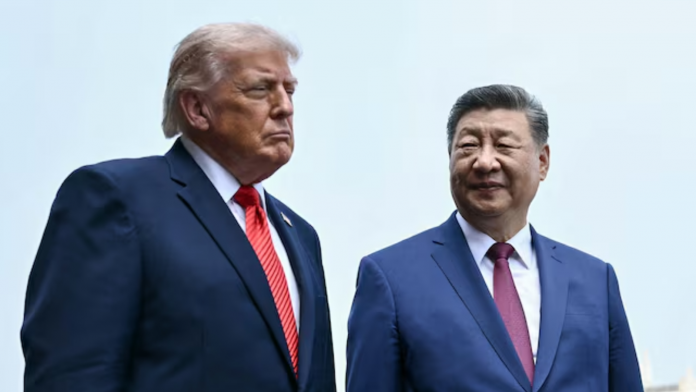
Donald Trump has returned from a high-level visit to Beijing after talks with Chinese leader Xi Jinping, with both sides agreeing on limited cooperation but leaving major trade and strategic disputes unresolved.
The two-day summit was described by analysts as producing modest results, reinforcing the view that relations between the United States and China remain in a long-term state of competition rather than cooperation. While the meeting avoided escalation, it also failed to deliver major breakthroughs on trade, technology, or security issues.
The talks highlighted what many experts describe as a return to a “managed stalemate” between the world’s two largest economies. After periods of intense trade conflict and temporary truces, both sides now appear to be operating within a more stable but still deeply divided relationship.
For Washington, key concerns remain unresolved, including trade imbalances, industrial policy, and China’s growing military influence in the Indo-Pacific region. For Beijing, the summit provided a degree of stability as it continues to manage domestic economic pressures and long-term technological competition with the United States.
During the visit, Trump was accompanied by several major business leaders, but the trip did not produce the scale of commercial agreements seen in earlier summits. While some announcements were made regarding agricultural trade and aircraft purchases, analysts noted that the overall economic outcomes fell short of expectations.
One of the few confirmed developments was discussion around a new framework for ongoing economic engagement, which officials described as a mechanism aimed at managing tariffs and trade issues. However, details remain limited, and no major structural agreements were announced.
A White House representative said the administration had secured deliverables for American businesses, including expanded export opportunities, but provided few specifics. Chinese officials described the talks as “constructive” and “strategic,” saying both sides explored ways for the two major powers to coexist within a competitive global environment.
Despite these statements, analysts say the summit underscored how far apart the two countries remain on key issues. Long-standing disputes over tariffs, industrial overcapacity, and technology restrictions were not resolved, and no major policy shifts were announced.
Earlier trade tensions had seen both countries impose high tariffs on each other’s goods, creating global market instability. Although a temporary truce was reached last year, both sides continue to maintain pressure through trade controls and strategic economic policies.
China is also believed to have pushed for a longer extension of the existing trade truce, while the United States reportedly resisted committing to extended timelines. Negotiators also discussed ongoing investigations and tariffs, some of which remain politically sensitive in Washington.
One of the more closely watched issues was advanced technology exports, particularly artificial intelligence-related chips. However, no agreement was reached on easing restrictions on high-end semiconductor sales, a topic of significant concern for both governments and global tech companies.
Economic analysts say the lack of breakthroughs reflects a broader shift in expectations. Rather than aiming for a return to close cooperation, both countries now appear to be managing a structured rivalry.
Observers note that earlier summits, such as those in 2017, produced far larger commercial agreements, while this week’s meeting resulted in comparatively limited deals.
Some analysts argue that the outcome reflects a strategic calculation by both sides to avoid escalation while maintaining leverage. Others suggest it highlights the difficulty of resolving deep-rooted disagreements over trade systems, national security, and global influence.
China, meanwhile, appears focused on maintaining stability while strengthening its domestic industries and technological capabilities. The United States continues to balance economic engagement with efforts to limit China’s access to sensitive technologies.
Despite the lack of major breakthroughs, both governments signaled that communication channels remain open. Officials indicated that future meetings and possible state visits could take place later in the year, depending on diplomatic progress.
For now, the summit leaves the relationship between the United States and China in a familiar position: stable enough to avoid crisis, but far from resolution.
