


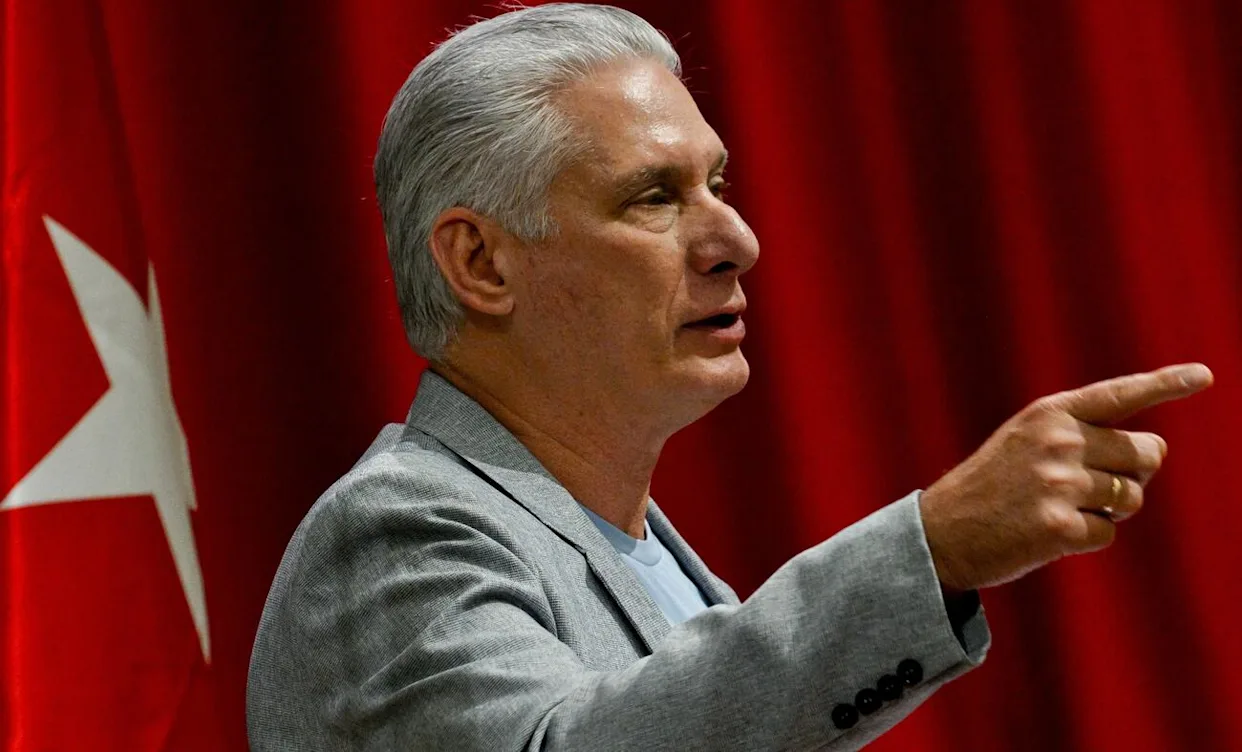
Tensions between Cuba and the United States have escalated sharply after Cuban leaders warned of a “bloodbath” in the event of a US attack. At the same time, Washington has imposed new sanctions on Cuba’s intelligence agency and senior officials, further straining relations between the long-time adversaries.
Cuban President Miguel Díaz-Canel said the country has the right to defend itself, following reports in US media suggesting that Cuba may have obtained military drones from foreign partners. The reports also claimed that the country could consider using them in potential conflicts involving US targets.
According to US-based reporting cited by intelligence sources, Cuba has allegedly acquired more than 300 military drones from Russia and Iran. The reports suggested that Cuban authorities were exploring possible military responses, including potential strikes on US-linked targets such as the Guantánamo Bay base and naval vessels.
The Cuban government has strongly rejected the idea that it poses any threat to the United States. Díaz-Canel stated publicly that Cuba does not intend to attack any country but warned that any US military action would lead to severe consequences.
He described such a scenario as potentially triggering a “bloodbath with incalculable consequences,” while also emphasizing Cuba’s right to self-defense in the face of any external military threat. He did not directly confirm or deny the claims regarding drone acquisitions.
Cuba’s ambassador to the United Nations, Ernesto Soberón Guzmán, also responded to the growing tension. He said Cuba would resist any invasion and stressed that the country’s position on national defense remains unchanged. He referenced past US attempts to overthrow the Cuban government during the 1960s, saying they were unsuccessful and highlighting Cuba’s continued resolve.
The escalation comes alongside new sanctions announced by the US Treasury Department. The measures target Cuba’s main intelligence agency and several senior leaders. US officials said the sanctions are part of ongoing efforts to respond to actions they consider destabilizing.
Relations between the two countries have remained tense for decades, but recent developments have added new pressure. The combination of military concerns, intelligence allegations, and economic sanctions has intensified diplomatic friction.
Reports that Cuba may have obtained advanced military drones have raised concerns in Washington. US officials have not publicly confirmed operational details but have indicated that they are monitoring developments closely.
The alleged mention of possible drone activity near US military installations, including Guantánamo Bay in eastern Cuba, has further increased attention on the situation. However, these claims remain unverified by independent sources.
Cuba has repeatedly stated that it seeks to defend its sovereignty and does not intend to engage in offensive actions. Government officials argue that US policies toward the island, including sanctions and political pressure, contribute to instability in the region.
The latest exchange highlights the fragile state of US-Cuba relations, which have long been shaped by political hostility, economic restrictions, and historical conflict. Despite occasional attempts at dialogue in past years, significant tensions remain unresolved.
International observers say the current situation reflects a broader pattern of mistrust between the two governments. They warn that escalating rhetoric on both sides could increase the risk of further diplomatic breakdowns.
For now, both Washington and Havana continue to take firm public positions. The United States is applying economic pressure through sanctions, while Cuba is responding with strong warnings about national defense.
As the situation develops, attention is likely to focus on whether diplomatic channels can prevent further escalation or whether tensions will continue to rise in the coming weeks.
