


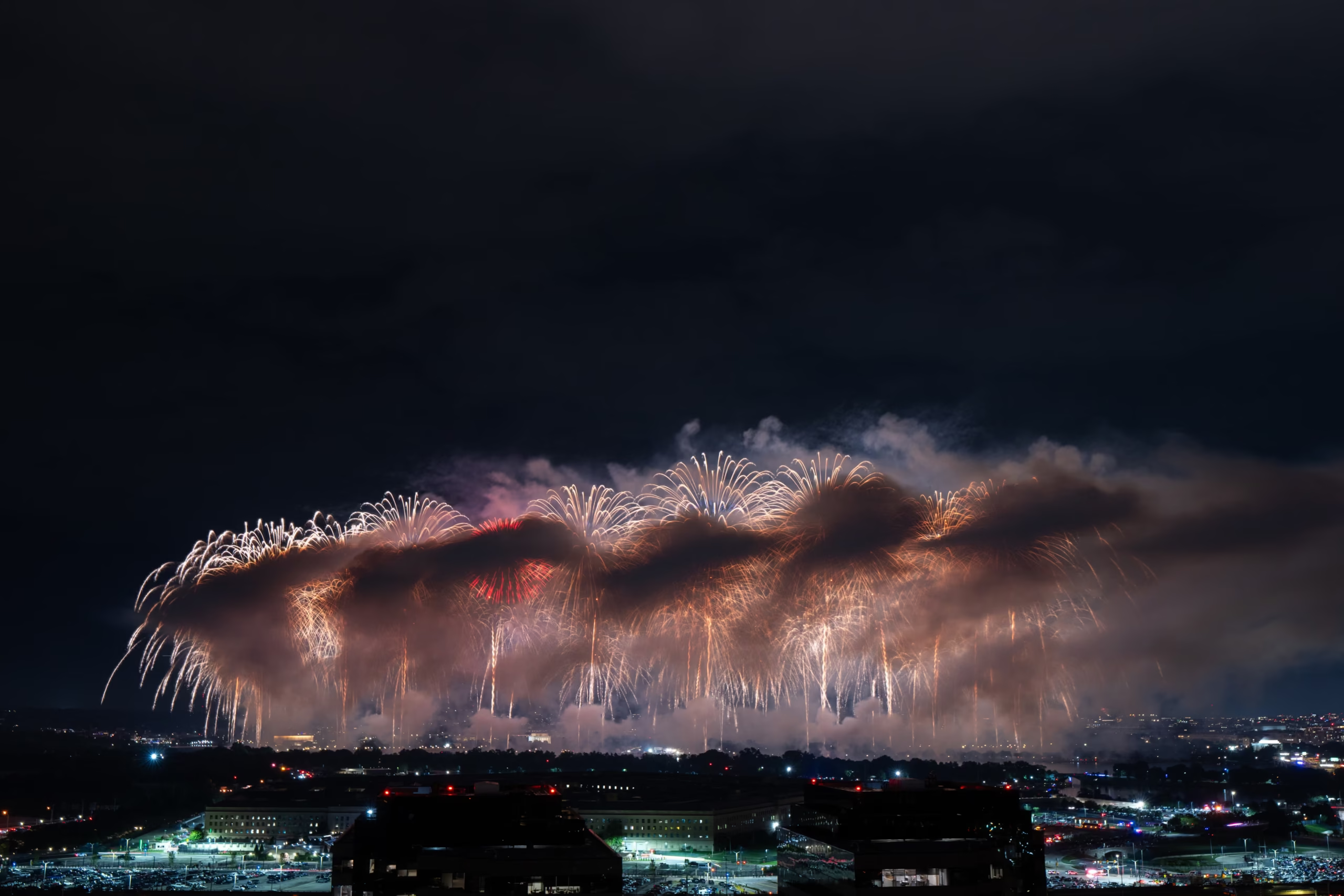
Washington, DC, briefly recorded the worst air quality of any major city in the world after a massive Fourth of July fireworks display sent smoke and fine particles across the nation’s capital. Air quality monitoring showed pollution levels climbed sharply after more than 850,000 fireworks were launched during a 40-minute celebration over the National Mall. The event came as residents experienced unhealthy air conditions for several hours, prompting health officials to urge people to limit outdoor activities.
Data collected from 26 air quality sensors across the city found that concentrations of fine particulate matter rose to 6.7 times higher than levels recorded before the fireworks began. Every monitoring station reached air quality levels that the Environmental Protection Agency classifies as unhealthy for sensitive groups, while some locations recorded even higher pollution. Researchers said the highest concentration of airborne particles was measured around 4 a.m. Sunday, nearly five hours after the fireworks ended. Pollution remained elevated for another five hours before conditions slowly improved.
City officials issued a Code Red air quality alert as smoke lingered over the area. The warning advised children, older adults, and people with heart or lung conditions to stay indoors as much as possible. Health officials also warned that healthy people could experience breathing problems during the period of poor air quality. The southwest section of Washington recorded the highest pollution levels because it was closest to one of the main fireworks launch sites in West Potomac Park. Weather conditions overnight also trapped smoke near the ground, making air quality worse in that part of the city.
Air quality experts said nearby communities may also have been affected. Smoke likely drifted into Arlington, Virginia, although researchers could not confirm that because there were not enough monitoring stations in the area. Experts said expanding real-time air quality monitoring would help communities detect dangerous pollution events more quickly and provide better health warnings. They also noted that thunderstorms moving through the region on Sunday evening helped clear smoke from the atmosphere, preventing air pollution from becoming even more severe.
The fireworks display began at 11 p.m. Saturday as part of celebrations marking the country’s 250th anniversary. Organizers said more than 850,000 fireworks were launched from 10 locations across Washington. That total was far higher than a typical Independence Day celebration in the city, which usually includes about 17,000 fireworks shells. President Donald Trump praised the display, calling it the most spectacular fireworks show he had ever seen. The celebration also followed a day of extreme heat that pushed temperatures above 100 degrees Fahrenheit across the region.
Health experts have long warned that fireworks release harmful pollutants into the atmosphere, including sulfur dioxide, carbon dioxide, carbon monoxide, and fine particulate matter that can travel deep into the lungs. These pollutants can trigger breathing problems, especially for people with asthma, heart disease, or other medical conditions. Environmental specialists said the latest data highlight how quickly large fireworks displays can reduce air quality in major cities. Officials continue to encourage residents to follow air quality alerts and reduce outdoor activity whenever pollution levels reach unhealthy levels.
