


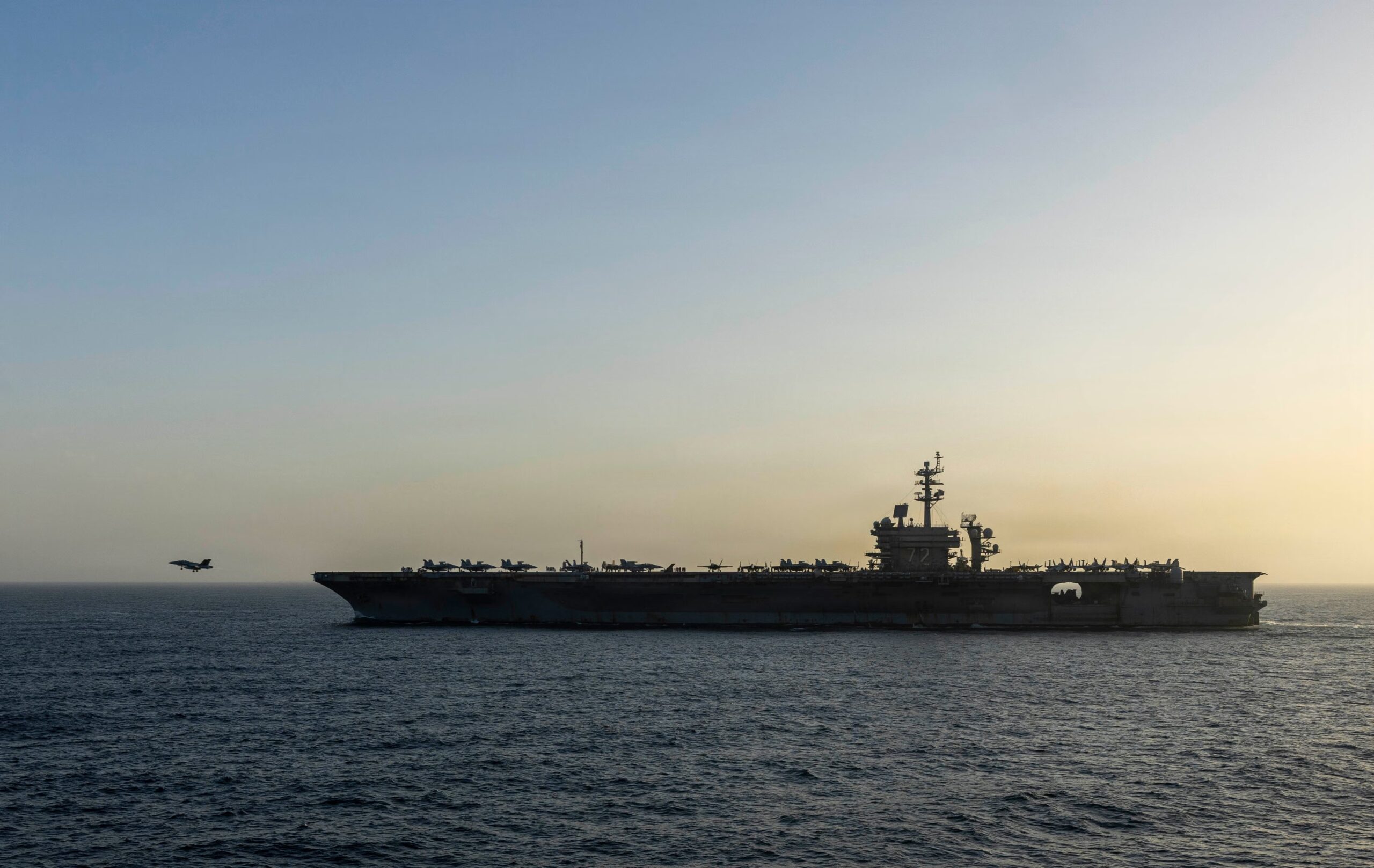
Iran Strait Tensions increased sharply after US forces carried out strikes on targets located on Iran’s Larak Island, prompting threats of retaliation from Tehran and reports of missile launches toward military sites in Jordan.
The operation marked the first publicly known US strike on Iranian territory since military action was paused in late July. The incident has raised concerns about regional stability and the security of shipping routes in the Strait of Hormuz, one of the world’s most important waterways.
According to US military officials, the strike targeted two launchers on Larak Island after Iranian forces were reportedly observed preparing rockets linked to sea mine operations near the Strait of Hormuz.
American officials said the activity posed a potential threat to maritime traffic moving through the strategic route. The United States viewed the preparations as a risk to commercial shipping and regional security.
Larak Island sits near Bandar Abbas and overlooks the Strait of Hormuz. Because of its location, the island plays an important role in monitoring and controlling traffic through the narrow passage.
The Strait of Hormuz remains one of the most critical energy routes in the world. Large volumes of oil and natural gas shipments move through the waterway each year, making any military activity in the area a matter of international concern.
Iran confirmed that the US strike caused casualties.
Iranian officials said two people were killed and two others were injured in the attack. Military leaders strongly condemned the operation and warned that a response would follow.
A spokesperson for Iran’s Revolutionary Guard described the strike as a serious mistake and said the United States would face consequences for its actions.
Several hours after the attack, Iranian media reported that Iran launched missiles toward US military facilities in Jordan.
The Revolutionary Guard later issued a statement saying ballistic missiles had been fired at military targets identified as King Hussein and al-Azraq bases. Iranian officials claimed the operation was a direct response to the strike on Larak Island.
According to Iranian statements, the missiles targeted military infrastructure and operational facilities linked to US forces.
Jordanian authorities provided a different account of the events.
The Jordanian military announced that air defence units intercepted eight missiles that entered the country’s airspace early Monday morning. Officials said defensive systems successfully stopped the projectiles before they reached their targets.
Jordan did not immediately report any casualties or significant damage following the interceptions.
The exchange has added to growing tensions between Washington and Tehran at a time when relations remain strained by military, political, and economic disputes.
The latest strike comes after renewed US efforts to increase pressure on Iran through sanctions and security measures. American officials recently expanded economic restrictions aimed at limiting Tehran’s influence and financial activity.
Iranian leaders have dismissed the sanctions campaign and argued that it represents a continuation of long-standing pressure tactics.
At the same time, concerns remain focused on the Strait of Hormuz.
The route has become increasingly important during the ongoing regional conflict. Any disruption to shipping traffic could affect energy supplies and international markets.
In recent months, commercial vessels traveling through the area have faced increased security concerns. Governments and shipping companies continue to monitor developments closely as military activity remains high.
The conflict involving Iran, the United States, and regional partners has now extended beyond six months. During that period, both sides have exchanged military actions, economic measures, and political warnings.
The latest events have renewed fears that further escalation could increase instability across the Middle East.
Attention also turned to comments made by President Donald Trump after the strike. He shared social media posts referencing Iranian energy infrastructure, adding to speculation about possible future developments.
Despite strong rhetoric from both sides, no new military actions were immediately reported following the missile interceptions in Jordan.
Diplomatic observers continue to watch closely for signs of either further confrontation or efforts to reduce tensions.
For now, the rise in Iran Strait Tensions highlights the fragile security situation surrounding one of the world’s most important maritime routes. With military forces on alert and both sides issuing warnings, the region remains under close international scrutiny as events continue to unfold.
