


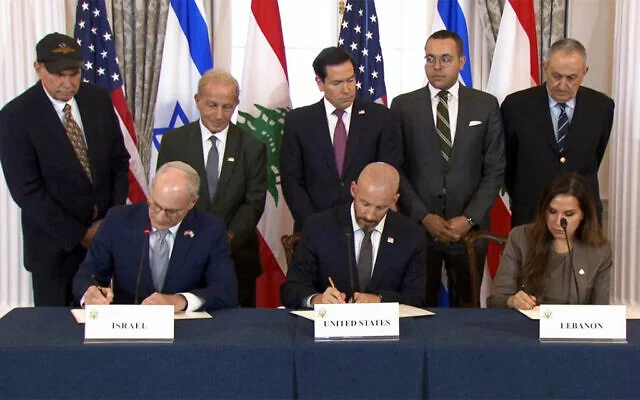
A newly signed Lebanon Israel framework agreement has sparked mixed reactions across Lebanon, with many residents expressing hope for stability while others remain cautious about the future. The agreement follows U.S.-mediated talks in Washington and marks the latest diplomatic effort to reduce tensions between the two neighboring countries.
People in different parts of Lebanon responded in very different ways after news of the agreement became public on Saturday. Residents in the southern city of Tyre, which has often been affected by cross-border conflict, voiced concerns about whether the agreement would lead to lasting peace. Meanwhile, many people in the capital, Beirut, welcomed the move as a possible step toward greater regional stability.
The framework agreement is designed to begin a new phase of dialogue between Israel and Lebanon. Officials involved in the negotiations say the document creates a foundation for future discussions but does not represent a final peace agreement.
The talks were facilitated by the United States, which has continued diplomatic efforts to ease tensions in the region. Officials hope the agreement will help lower the risk of future military escalation and create conditions for additional negotiations.
In Tyre, some residents said they remain skeptical because previous ceasefire efforts and diplomatic agreements have not always prevented renewed violence. Families living near the border have experienced years of uncertainty and believe lasting security will depend on how the agreement is implemented.
Others said they would welcome any arrangement that reduces the threat of conflict and allows communities to focus on rebuilding their lives and local businesses.
In Beirut, reactions were generally more optimistic. Some residents described the agreement as an opportunity to improve Lebanon’s security environment and support economic recovery. Many hope greater regional stability could encourage investment, tourism, and international cooperation.
Political analysts say public opinion remains divided because of Lebanon’s complex political landscape and the country’s long history of conflict with Israel. Different political groups have taken varying positions on negotiations and regional diplomacy over the years.
Supporters of the agreement argue that dialogue is necessary to prevent further conflict and protect civilians. They believe diplomatic engagement offers the best chance to reduce tensions and improve regional security.
Critics, however, question whether the framework agreement can produce meaningful results without addressing broader political and security issues. They say future negotiations will need to overcome significant challenges before a lasting settlement can be achieved.
The agreement follows several months of international diplomatic efforts aimed at encouraging both sides to reduce military tensions. Regional and global leaders have repeatedly called for peaceful solutions through negotiation rather than armed confrontation.
Observers note that framework agreements often serve as the first step in a much longer diplomatic process. They establish general principles for future discussions but usually require additional negotiations before final agreements are reached.
The United States has stated that continued dialogue remains important for maintaining stability in the Middle East. International partners are expected to monitor developments closely as both sides consider the next stage of discussions.
For many Lebanese citizens, the agreement represents both hope and uncertainty. While some believe it could open the door to greater peace and economic recovery, others remain cautious after years of regional conflict and political instability.
As negotiations continue, attention will remain focused on whether the Lebanon Israel framework agreement can lead to practical progress and help reduce tensions between the two countries. The coming weeks are expected to determine whether the diplomatic initiative can build enough trust to move toward a more comprehensive and lasting understanding.
