


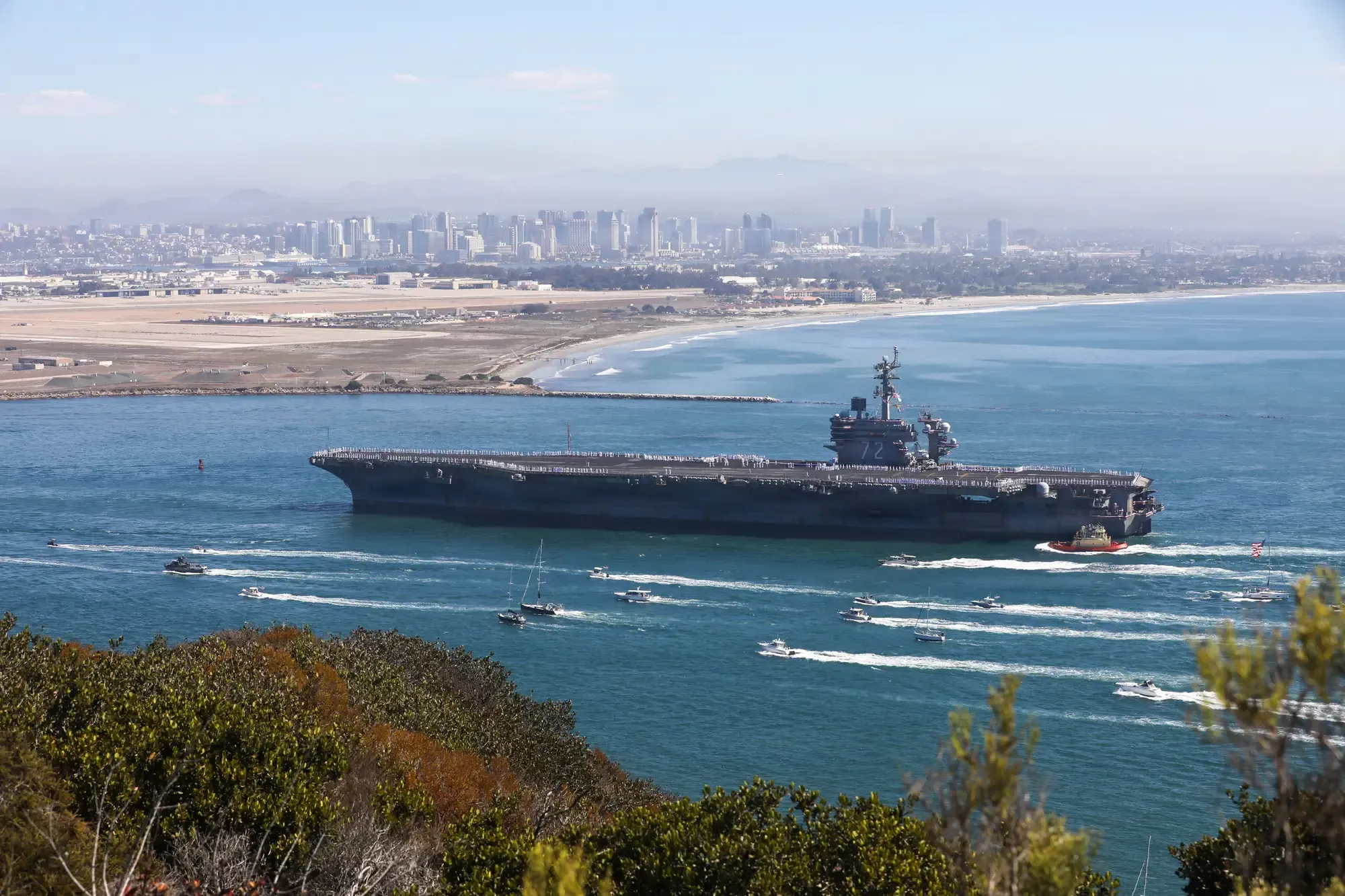
The USS Abraham Lincoln has completed a record-setting deployment after spending 321 days away from its homeport in San Diego. The aircraft carrier spent 286 days at sea without making a port call. The long mission was extended by the war with Iran and placed heavy demands on its crew.
The carrier left San Diego in November 2025. Its deployment grew longer after the start of Operation Epic Fury in late February. The operation became a major part of the US military effort during the conflict with Iran.
The Abraham Lincoln Carrier Strike Group played a key role in the fighting. Its aircraft carried out strikes against targets and helped protect US naval forces from enemy attacks.
Carrier Air Wing 9 operated from the ship during the mission. The air wing has nine squadrons and includes F/A-18E/F Super Hornets, F-35C Lightning II stealth fighters, and EA-18G Growler electronic attack aircraft.
The Navy said the air wing flew nearly 4,000 combat missions during the 40-day operation. Across the full deployment, it completed 14,037 aircraft sorties and recorded 31,460 hours of forward-deployed flight time.
The aircraft used about 20.5 million gallons of aviation fuel during the mission. The figures show the scale of the work needed to keep a carrier air wing active during a long deployment.
During Operation Epic Fury, the air wing launched 1,499 precision weapons. The weapons dropped more than 1.37 million pounds of ordnance on key targets. These included missile sites, defense production plants, military facilities, and Iranian naval assets.
The air wing also helped shield the strike group from enemy action. The Navy said the mix of fourth- and fifth-generation aircraft showed how future naval air forces could work in real combat.
The F-35C was among the aircraft used in the operation. The stealth fighter is built to operate in areas protected by enemy radar and air defenses. It worked alongside other planes that provide strike power, electronic warfare, and support.
After a ceasefire in April and the end of Operation Epic Fury, the strike group took part in a US Navy blockade. Iran later began targeting commercial shipping. In response, the group joined strikes against Iranian coastal defenses and missile sites.
The strike group then supported a second blockade before heading home. During the full deployment, the Abraham Lincoln traveled more than 93,000 nautical miles. It received fuel, food, and other supplies through 72 replenishments at sea.
The Navy awarded the strike group the Presidential Unit Citation for its actions. The honor is among the highest awards given to military units for exceptional service in combat.
Yet the long mission also raised serious concerns about the welfare of sailors. The strike group included three guided-missile destroyers, and reports pointed to supply strain during the extended operation.
Written responses sent to Congress by Acting Navy Secretary Hung Cao revealed eight suicide attempts among sailors assigned to the Abraham Lincoln Carrier Strike Group. Some sailors reportedly tried to jump overboard. No deaths by suicide were reported.
Cao praised the sailors for their work under difficult conditions. He said the men and women of Carrier Strike Group 3 had shown strong resolve during a demanding mission. He also said decisions to extend deployments were never made lightly.
The Navy said it remained committed to the health, safety, and morale of its crews. It also stressed the need to keep the fleet ready for future missions.
Navy leaders are now reviewing lessons from the deployment. The service plans to place more supplies on aircraft carriers so they can operate for longer if normal support routes face problems.
The Navy is also working to improve life for sailors and Marines. These efforts include better ways for service members to stay in touch with loved ones while they are away from home.
The Abraham Lincoln deployment shows how carrier groups can support major military operations far from shore. It also highlights the pressure that long missions can place on crews and supply systems.
As the Navy studies the record mission, leaders face the task of balancing combat needs with crew welfare. Better supplies, stronger support systems, and improved contact with family may help reduce the strain of future deployments.
