


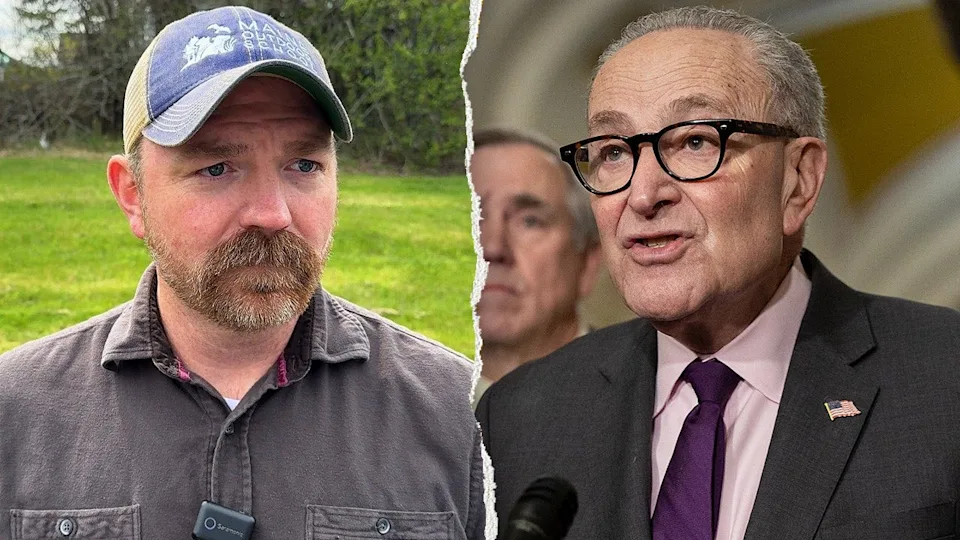
Top Democratic leaders are facing growing questions after refusing to comment on a resurfaced controversy involving Maine Senate candidate Graham Platner and a series of offensive Reddit posts that have sparked political tension ahead of the midterm elections.
The controversy centers on newly uncovered online posts allegedly linked to Platner, a Democratic candidate running for the U.S. Senate in Maine. The posts, which reportedly come from an archived Reddit account, include graphic sexual comments, offensive jokes, and disturbing language about violence.
Some of the posts describe explicit personal behavior and contain crude references to sexual acts. Others include insulting remarks about a wounded U.S. soldier, which have drawn strong criticism from political observers and opponents.
Despite the growing backlash, senior Democratic figures have largely declined to address whether the controversy could damage the party’s standing in a key Senate race.
Hakeem Jeffries was asked about the issue during an interview but said he had not seen the posts and did not offer further comment.
The silence has fueled further scrutiny as Republicans increase pressure on Democrats to respond. The Maine Senate race is already seen as one of the most closely watched contests in the upcoming election cycle.
Platner has faced growing attention in recent months over his online history. Reports have linked him to a now-deleted Reddit account that allegedly contained more than 2,000 posts spanning several years.
The resurfaced material has added to an already controversial public profile. Previous reports have highlighted past online comments attributed to Platner that included political statements and inflammatory discussions on social issues.
The situation has also raised questions about vetting processes for political candidates and how past online activity can influence modern campaigns.
Elizabeth Warren has previously defended her support for Platner despite earlier criticism. She has argued that voters should evaluate candidates based on their current positions rather than past online behavior.
Warren’s endorsement came even after earlier concerns had already surfaced about Platner’s digital history, including controversial posts that drew public attention during the Democratic primary.
Other Democratic leaders have also been asked about the issue. Chuck Schumer declined to respond when questioned about Platner’s posts, adding to perceptions that party leadership is avoiding direct involvement in the controversy.
Platner is widely seen as the likely Democratic nominee in the race against long-time Republican Senator Susan Collins. The Maine Senate contest is expected to be one of the most competitive races in the next election.
Republican-aligned groups have already begun using the controversy in campaign messaging. A political action committee supporting Collins has reportedly spent millions on advertising highlighting Platner’s past online activity.
Campaign strategists say the controversy could become a major issue in a race that is already attracting national attention and heavy financial support from both parties.
Platner has previously responded to criticism by saying that his posts were meant as jokes or satire. He has described some of his online activity as “shitposting,” a term used to describe deliberately provocative or low-quality online comments made for humor or reaction.
However, critics argue that the content goes beyond casual internet humor and raises concerns about judgment and professionalism for a candidate seeking national office.
The controversy has also sparked broader debate about how political parties handle candidates with controversial digital histories. In the age of social media, old posts and online activity can resurface quickly and shape public perception during campaigns.
For Democrats, the situation adds pressure at a time when party unity and messaging are already under scrutiny ahead of the midterm elections.
As the race continues, attention is expected to remain focused on both Platner’s campaign and whether Democratic leaders will take a clearer public position on the controversy surrounding him.
