


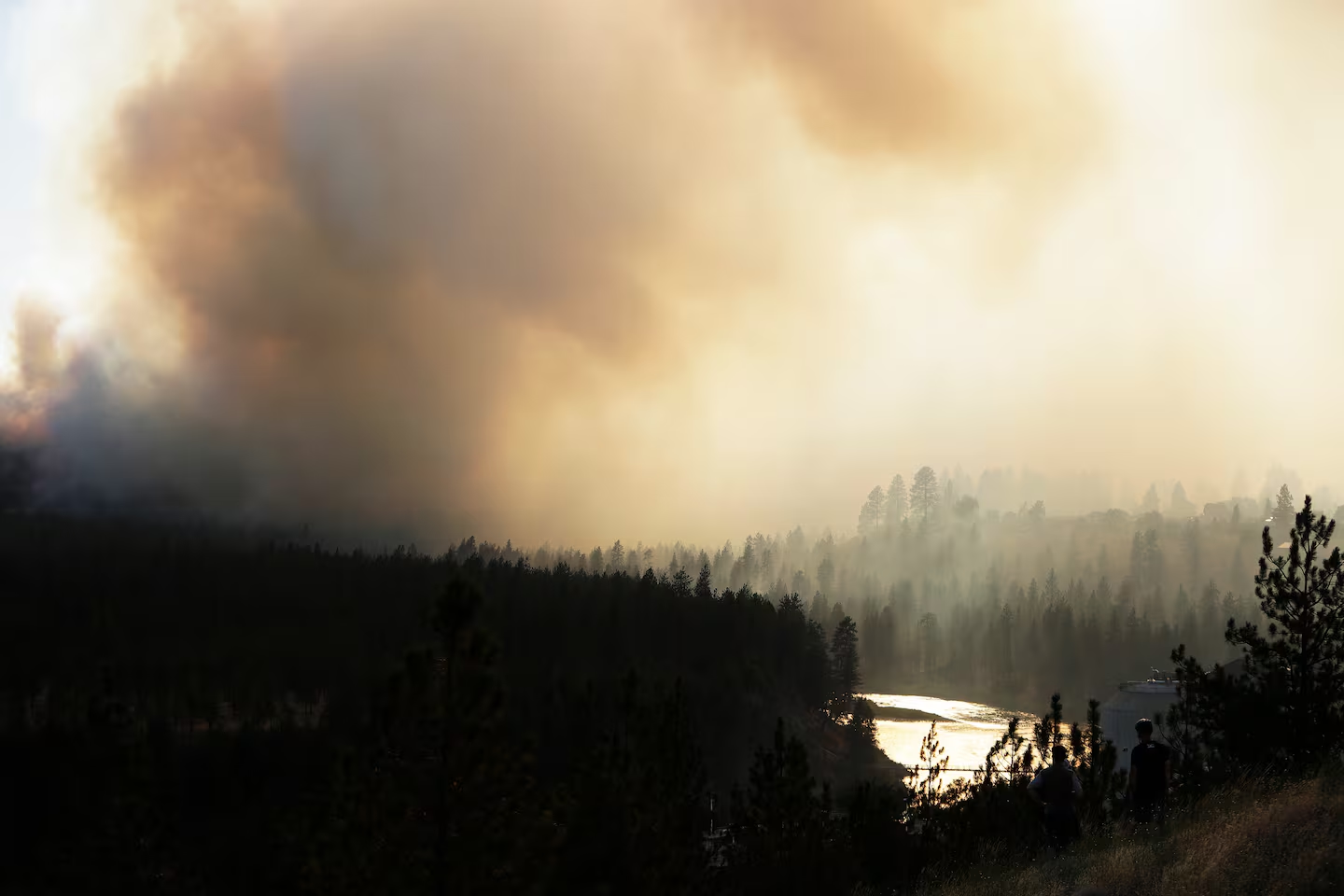
Wildfires in eastern Washington forced about 60,000 people to evacuate from communities near Spokane as firefighters battled rapidly spreading flames that destroyed hundreds of structures over the weekend.
Authorities said the fires burned more than 8 square miles around Spokane, Washington’s second-largest city. At least 600 homes, businesses, and other buildings were damaged or destroyed as strong winds and dry conditions fueled the blazes.
Emergency officials reported that no injuries or missing persons had been confirmed as of Sunday. However, they cautioned that damage assessments were still in the early stages and conditions could change as crews continue to inspect affected areas.
The evacuations included patients from the local U.S. Department of Veterans Affairs hospital. Thousands of residents were forced to leave their homes as flames moved closer to neighborhoods across the region.
Images from the area showed heavy smoke rising above residential communities, burning buildings, and neighborhoods left covered in ash. In some locations, only chimneys remained standing after homes were destroyed by fire.
Federal, state, and local officials warned that the danger is far from over. Weather forecasts call for continued dry conditions and strong winds, creating challenges for firefighters working to contain the fires.
Officials said the causes of the Spokane-area fires remain under investigation.
The wildfire emergency has stretched firefighting resources across Washington state. Authorities reported that nearly 390 square miles have burned statewide, with several major fires still not contained.
Washington Governor Bob Ferguson declared a state of emergency as crews worked to protect homes and critical infrastructure. The National Weather Service also issued a rare red flag warning for eastern Washington because of the high fire danger.
Fire officials identified three major fires affecting the Spokane area: the Old Trails Fire, the Fairview Fire, and the Meadowview Fire. Strong wind gusts reaching up to 45 miles per hour increased the risk of rapid fire growth.
Firefighters said Spokane’s landscape presents additional challenges. The Spokane River runs through the city and is surrounded by steep slopes and canyons that can channel wind and accelerate fire movement.
Emergency shelters were opened for displaced residents. Officials said around 400 people were staying at Spokane’s main convention center shelter on Sunday.
The fires also caused significant power disruptions. Local utility provider Avista reported that about 10,000 customers remained without electricity. The company said outages had improved from a peak of 30,000 customers but warned that additional disruptions remain possible as repairs continue.
The wildfire crisis extends beyond Washington. Fire crews across the western United States are battling dozens of active fires.
In Idaho and Oregon, firefighters continued efforts to contain a massive wildfire that has burned more than 500 square miles of grassland. The fire threatens hundreds of homes and other structures in ranching communities.
Meanwhile, a large wildfire in central Utah more than doubled in size over the weekend. Local officials described the situation as catastrophic after strong winds pushed flames beyond containment lines. More than 100 cattle were reported killed, and mandatory evacuations were ordered for parts of the town of Fillmore.
The National Weather Service has also issued air quality alerts across parts of the Northwest due to wildfire smoke. Additional fire weather warnings remain in effect for several western states.
Officials said extreme heat, dry vegetation, and strong winds continue to create dangerous conditions across the region.
Firefighters remain focused on protecting lives and property as crews work around the clock to slow the spread of the flames. Authorities urged residents in affected areas to follow evacuation orders and stay informed about changing conditions.
With weather conditions expected to remain unfavorable in the coming days, emergency officials warned that the wildfire threat across the western United States remains high.
