


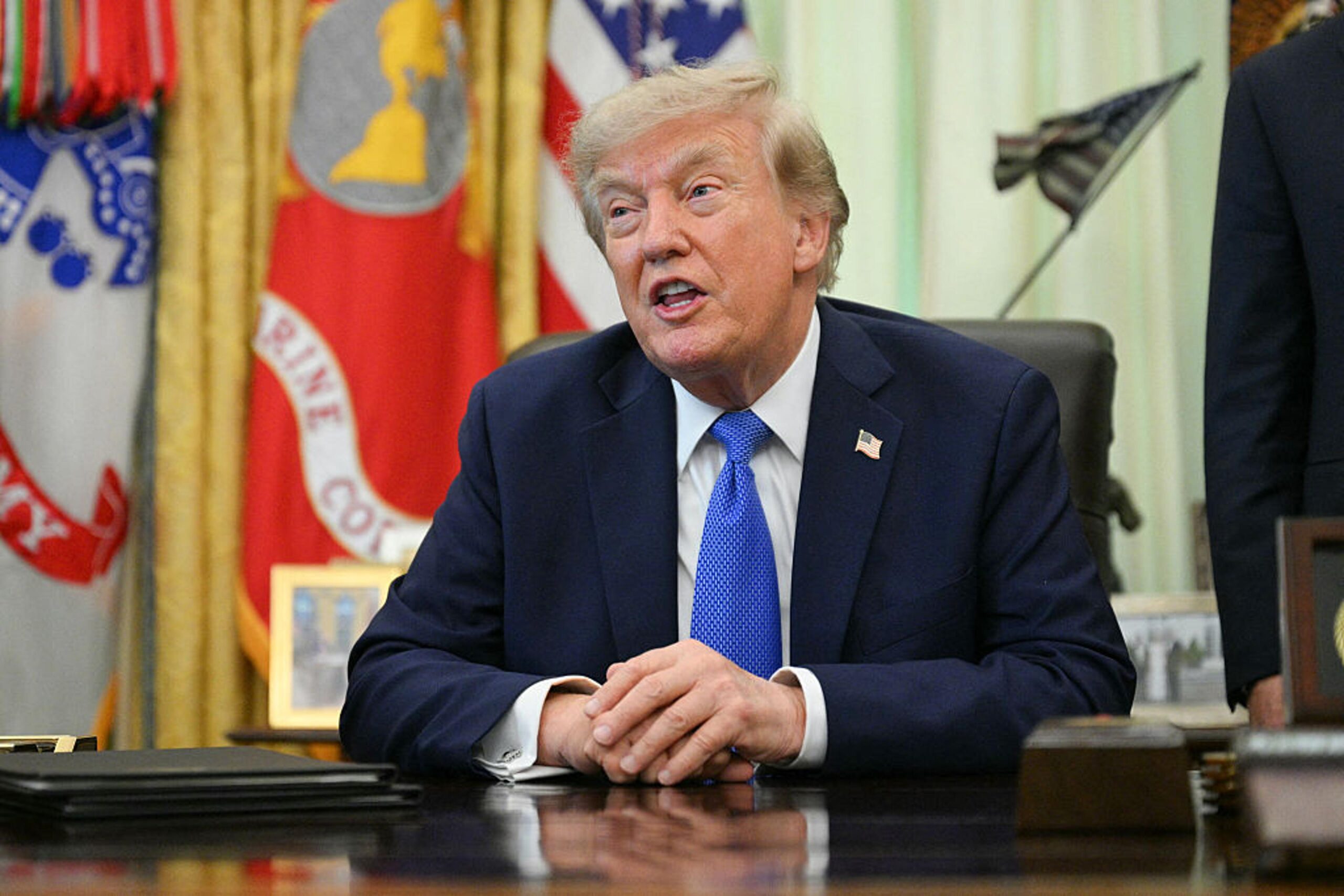
The Trump administration announced a major investment plan aimed at strengthening domestic supply chains for critical minerals and battery materials. The initiative, valued at $3 billion, is designed to expand U.S. production, support national security goals, and reduce dependence on foreign suppliers.
President Donald Trump revealed the new funding package during a roundtable discussion held at the State Department. The event brought together more than 200 representatives from the mining, energy, investment, and education sectors.
Speaking at the gathering, Trump said the United States must increase its production of essential minerals that are used in defense systems, advanced technology, electric vehicles, and industrial manufacturing.
According to the administration, the investment package will support projects across the mining and battery supply chain. Officials say the effort is intended to help secure materials that are considered vital for economic growth and military readiness.
One of the largest announcements involved a conditional loan worth $1.4 billion for battery technology company Sila Nanotechnologies. The funding would come through the Defense Department’s Office of Strategic Capital and support the production of lithium-ion battery components.
The same office also announced a conditional loan of $400 million for Sunrise Energy Metals, a company involved in scandium production. Scandium is a specialty mineral used in aerospace, defense, and advanced manufacturing applications.
In addition, magnet technology company Niron Magnetics was offered a conditional loan of $150 million. Magnets made from critical minerals are used in military equipment, renewable energy systems, electronics, and transportation technologies.
The administration also confirmed that the U.S. Export-Import Bank plans to provide a combined $58 million in financing support for several mineral-related projects. The funding is expected to assist companies involved in resource development and processing activities within the United States.
Trump described critical minerals as essential resources that support many sectors of the economy. He said these materials play a major role in products ranging from military systems and aircraft to automobiles and electronics.
Senior administration officials attended the event, including Interior Secretary Doug Burgum, Secretary of State Marco Rubio, Commerce Secretary Howard Lutnick, and National Security Council official David Copley.
Government officials have increasingly emphasized the importance of securing reliable mineral supplies. Many of the materials targeted by the investment plan are currently sourced from overseas, with China playing a major role in global production and processing.
The administration argues that expanding domestic mining and refining capacity will strengthen supply chain resilience and reduce potential risks associated with foreign dependence.
Defense needs are also a key factor behind the initiative. Officials have stated that critical minerals are required to replenish military stockpiles and support the production of advanced weapons systems. Demand for these resources has increased as governments around the world seek to modernize defense capabilities and secure strategic materials.
Industry leaders attending the roundtable highlighted the growing importance of domestic mineral production. Several executives showcased products and technologies tied to the sector.
Among them was Tom Albanese, chairman of American Ocean Minerals, who presented Trump with a gold replica of a mineral nodule that the company hopes to recover from the Pacific Ocean seabed. Deep-sea mining has become an area of growing interest as countries search for new sources of critical resources.
Another attendee, Jim Litinsky, chief executive of rare earth producer MP Materials, presented magnets produced at the company’s Texas facility. Rare earth magnets are essential components in electric vehicles, defense systems, wind turbines, and consumer electronics.
The investment plan reflects a broader effort to expand U.S. manufacturing and resource development. Policymakers have increasingly focused on securing domestic access to strategic materials that support energy technologies, industrial production, and national defense.
Supporters of the initiative argue that stronger domestic supply chains can create jobs, encourage investment, and improve long-term economic security. They also believe the strategy can help ensure a stable supply of materials needed for emerging technologies.
The US Critical Minerals Investment program represents one of the largest recent federal efforts to strengthen domestic mineral production. As projects move forward, government officials and industry leaders will closely monitor whether the funding leads to increased mining, processing, and manufacturing capacity across the country.
