


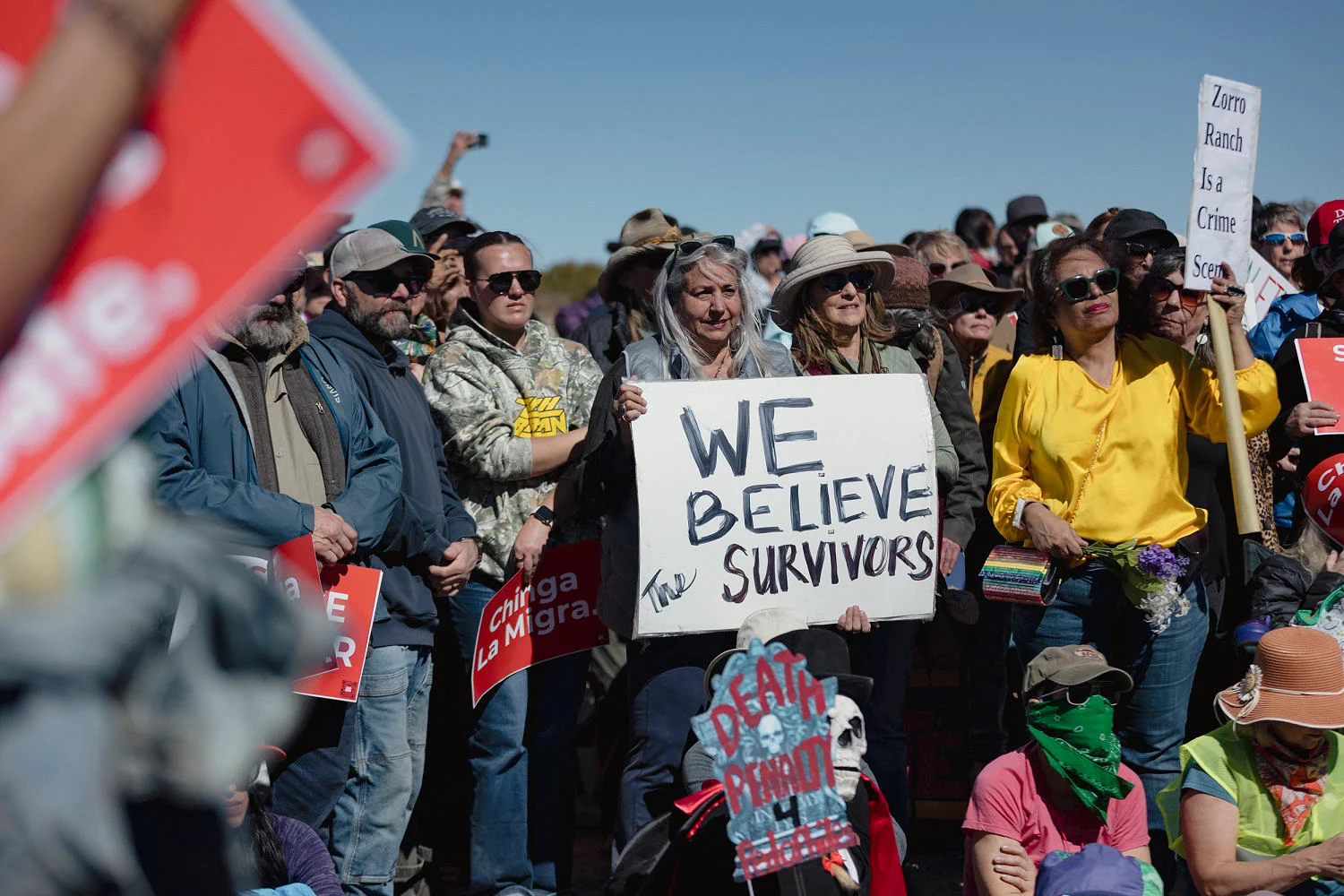
Rachel Benavidez says it is not too late to uncover the truth about what happened at Jeffrey Epstein’s New Mexico ranch, known as Zorro Ranch.
She is one of at least ten women who say they were abused there in the late 1990s and early 2000s.
They say they were brought in with promises of money or career help. They say they were trapped in a remote place with little escape.
Some say they were forced into sexual acts, including assaults and repeated abuse. The ranch was isolated and heavily guarded.
For years, Benavidez stayed silent. She later spoke to investigators after Epstein was arrested in 2019, when other victims also came forward.
In 2008, Epstein had pleaded guilty in Florida to charges linked to underage girls. He later reached a deal that limited jail time.
He was arrested again in 2019 on federal charges in New York. The New Mexico ranch was not a focus of that case.
Epstein died in jail in 2019. His associate Ghislaine Maxwell was later convicted and is now in prison.
In 2024 and 2025, new documents and claims led New Mexico authorities to reopen investigations into the ranch.
The state attorney general has said his office is now searching for answers that were missed for years. A search of the property was done recently.
Survivors say they still feel trauma. Many say they want justice, even if Epstein is dead.
They believe others helped enable the abuse. They want all responsible people to be identified and held accountable.
The case has also raised questions about past law enforcement decisions. Critics say key chances to investigate were missed in both state and federal systems.
Local officials say they are now trying to give survivors a safe space to speak. They also say they will follow every lead.
Despite the renewed attention, survivors say the process is slow. They continue to push for transparency and justice in New Mexico.
The story of Zorro Ranch remains one of the most troubling parts of the Epstein case. Survivors hope the truth will finally come out.
Benavidez says the ranch felt isolated and controlled. She says there were no nearby homes. The roads were long and private.
She says she was first hired as a massage therapist. She later says the situation turned abusive.
She says she was pressured to return many times. She says fear made it hard to refuse.
Survivors say they only later learned others had similar experiences. They found support from each other.
Authorities say they are reviewing old evidence. They say they are also collecting new testimony.
The investigation now includes new political attention in New Mexico. Leaders say they want full transparency.
Survivors hope that more witnesses will come forward. They say truth is still missing in many parts.
The case continues to raise national concern. It remains one of the most discussed abuse cases in recent history.
Lawmakers say they are watching the investigation closely. Some want federal help to ensure full cooperation.
Legal experts say such cases often take years to fully uncover. They say evidence can be difficult to recover after time passes.
Community members in New Mexico say they want answers. Many say they feel the case was ignored for too long.
Survivors say they continue to speak out despite emotional pain. They say speaking is part of healing and justice.
Benavidez says her goal is accountability, not attention. She says she wants a full investigation into everyone involved, including enablers who were never charged.
She also says the emotional impact remains with her daily life. Still, she continues her work as a hospice nurse and focuses on helping patients.
Officials say the investigation is ongoing and may expand further as more people come forward.
The case continues to be one of the most sensitive investigations in New Mexico, with survivors hoping the truth will finally be fully uncovered and justice served.
