


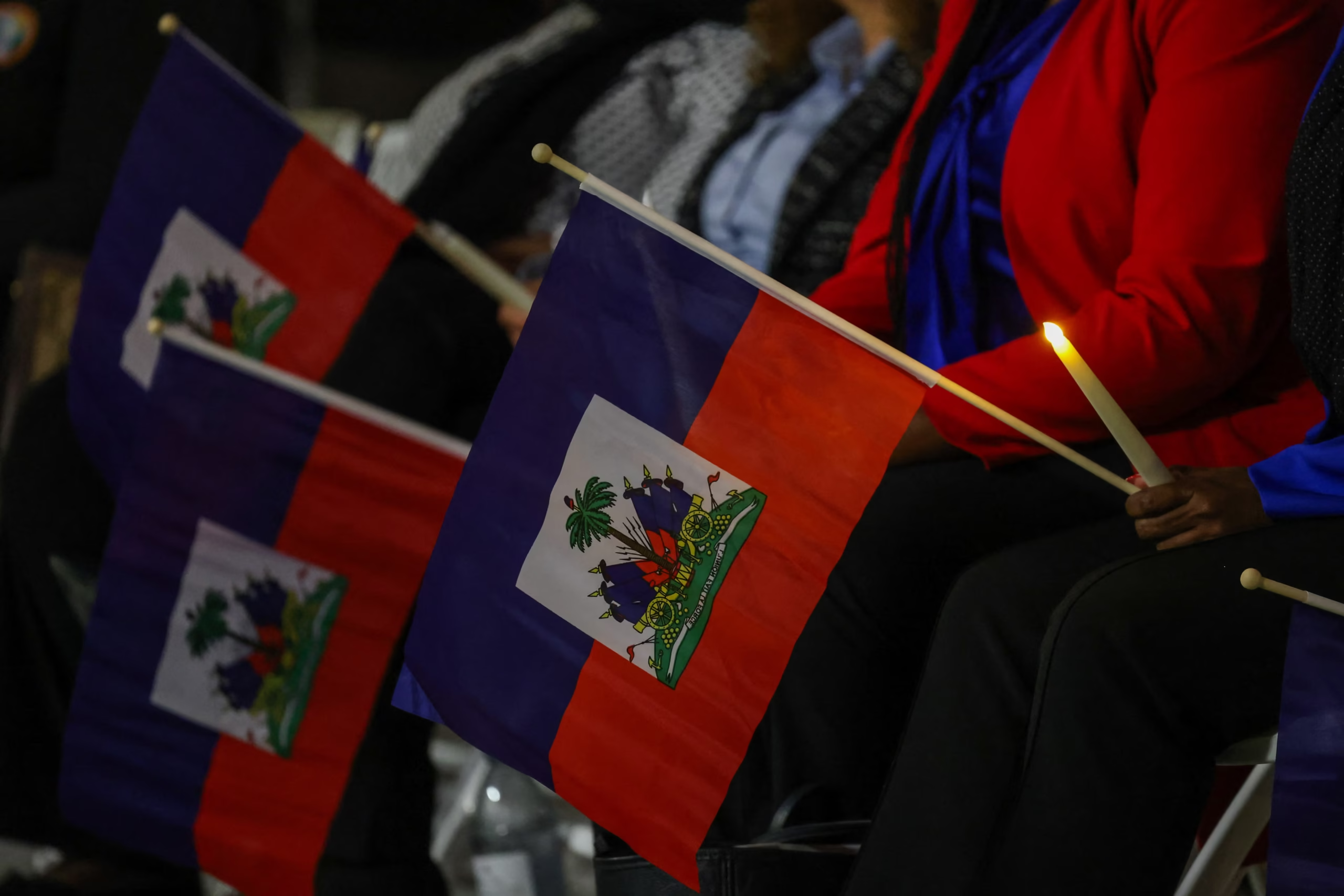
The Temporary Protected Status Extension has passed the U.S. House of Representatives, marking a major bipartisan decision on immigration policy. The bill extends deportation protections for roughly 350,000 Haitians living in the United States for an additional three years.
Lawmakers supporting the measure said the extension is necessary due to ongoing humanitarian concerns in Haiti. They also pointed to the economic contributions made by Haitian immigrants working across multiple sectors in the United States.
Temporary Protected Status, often called TPS, is a program that allows people from certain countries facing conflict, disasters, or unsafe conditions to remain in the U.S. without fear of deportation for a limited time.
Haiti has faced years of political instability, natural disasters, and security challenges. These conditions have led U.S. officials to maintain TPS protections for Haitian nationals over multiple extensions.
Supporters of the bill in the House said the decision reflects both humanitarian responsibility and practical workforce considerations. Many TPS holders are employed in healthcare, construction, hospitality, and service industries.
The bipartisan nature of the vote showed rare agreement between Democrats and Republicans on immigration relief. Lawmakers backing the extension argued that sudden deportations would create both human suffering and economic disruption.
Some members of Congress emphasized that many Haitians under TPS have lived in the United States for years, with families, jobs, and community ties already established.
Opponents of long-term extensions of TPS programs, however, argue that temporary protections should not become permanent solutions. They say immigration policy should be updated to reflect current conditions and legal frameworks.
Despite these debates, the House vote signals strong support for continuing protections at least in the short term. The bill now moves through the legislative process, where further approval steps are required before becoming law.
Advocates for Haitian communities welcomed the decision, saying it provides stability for families who have been living under uncertainty about their legal status. Many TPS holders have been in the U.S. for more than a decade.
Immigration experts say the extension also highlights ongoing challenges in reforming the broader U.S. immigration system. TPS decisions often become long-term policy tools even though the program is intended to be temporary.
The Biden administration has previously supported extending TPS for Haiti, citing continued instability in the country. Humanitarian conditions, including violence and infrastructure challenges, remain key factors in policy decisions.
Economists also note that TPS recipients contribute significantly to local economies, filling labor shortages and supporting essential industries. This has become an important argument in favor of extending protections.
As the bill moves forward, attention will turn to the Senate and the executive branch for final approval steps. The outcome will determine whether the three-year extension becomes official federal policy.
For now, the Temporary Protected Status Extension represents a significant moment in U.S. immigration policy, combining humanitarian concerns with economic and political considerations.
