


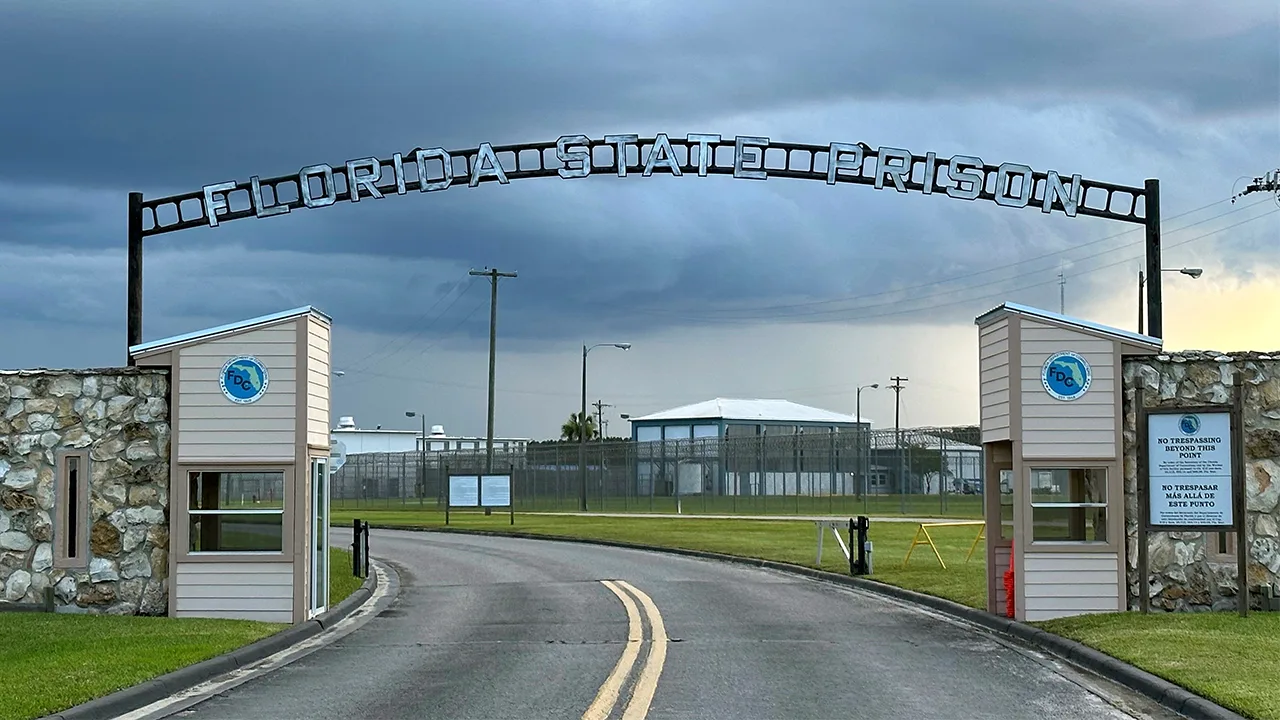
A Florida execution case has moved forward after Governor Ron DeSantis signed a death warrant for Richard Knight, a 47-year-old inmate convicted in a double murder that shocked the state more than two decades ago. Knight is scheduled to be executed on May 21 at Florida State Prison in Starke.
Knight was convicted in the 2000 killings of Odessia Stephens and her 4-year-old daughter, Hanessia Mullings. Court records show the crime happened after an argument involving Knight and Stephens. Prosecutors said the attack took place inside the home where the victims were staying.
Authorities described the killings in court documents as extremely violent. They said the case involved multiple knife wounds and signs of a prolonged struggle inside the home.
According to trial evidence, Stephens and her daughter were asleep when the attack began. Investigators said Knight took knives from a kitchen and entered the bedroom where they were resting.
Court records state that Stephens was stabbed multiple times, with severe injuries to her neck, chest, back, and chin. Prosecutors also said she showed signs of a struggle and possible strangulation during the attack.
The child was also killed during the incident. Investigators said she suffered multiple stab wounds to the upper body, neck, and hand. The details presented in court described a violent scene that unfolded inside the home.
The Florida execution case continued through years of appeals. Knight was sentenced to death in 2007 after a jury unanimously recommended capital punishment for the double murder convictions.
His legal team has repeatedly challenged both the conviction and sentence. However, court records show that all major appeals have been denied so far.
The death warrant was signed as part of a series of executions scheduled in Florida. Governor Ron DeSantis has increased the number of death warrants signed in recent years, leading to a rise in executions across the state.
Florida has carried out multiple executions in recent years. In 2025, the state set a modern record with 19 executions, the highest annual total since the death penalty was reinstated in 1976.
Before that, the previous highest annual totals were eight executions in both 1984 and 2014. Florida has also remained one of the most active states in carrying out capital punishment in the United States.
The Florida execution case is part of a broader national debate over the death penalty. Advocacy groups continue to raise concerns about fairness, legal representation, and due process in capital punishment cases.
Organizations such as the Equal Justice Initiative argue that death penalty cases require strict review due to the irreversible nature of executions. They have repeatedly called for reforms in how such cases are handled.
Florida has already carried out several executions in 2026. Officials confirmed that five inmates have already been put to death this year. Another execution is scheduled for April 30.
That upcoming case involves James Hitchcock, a 70-year-old inmate convicted in the rape and murder of his 13-year-old step-niece. His execution is also expected to take place at Florida State Prison.
The most recent execution in the state took place earlier this week. Chadwick Willacy, 58, was executed for the murder of his elderly neighbor in Palm Bay. The case involved setting the victim on fire, according to court records.
Florida’s use of the death penalty has placed it among the most active states for executions in the country. Alongside Alabama, Texas, and South Carolina, the state continues to play a major role in carrying out capital punishment.
The upcoming execution of Richard Knight is expected to draw renewed attention to the justice system and the ongoing debate over the death penalty in the United States. The Florida execution case remains under public and legal scrutiny as the date approaches.
