


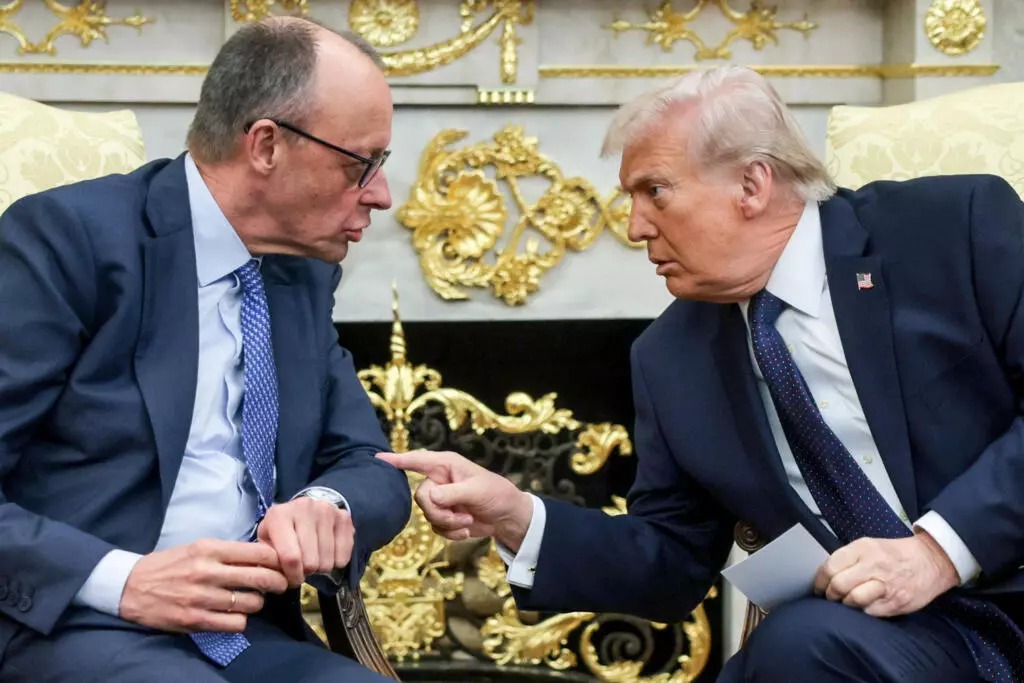
Germany has agreed to purchase American-made Tomahawk cruise missiles as Europe continues debating how much it should rely on the United States for its long-term defense. The agreement comes as NATO members increase military spending while also seeking to strengthen Europe’s own defense industry.
German Chancellor Friedrich Merz announced the agreement after this week’s NATO summit. Speaking before Germany’s parliament, he confirmed that Berlin and Washington had signed a letter of intent covering the planned purchase of Tomahawk cruise missiles and ground-based Typhon launcher systems.
The agreement now awaits formal approval from the United States, which is expected by August. Officials have not announced how many missiles or launcher systems Germany plans to buy. The systems will be operated by German personnel, with no U.S. military forces deployed to manage the equipment.
The Tomahawk missile has a range of about 1,600 kilometers. From German territory, it can reach targets deep inside Russia, making it an important addition to Germany’s long-range military capabilities.
German officials described the purchase as an immediate solution while the country continues working with European partners on future defense projects. Chancellor Merz said Germany still plans to develop European-made missile systems that can eventually reduce dependence on foreign suppliers.
The agreement has renewed discussion across Europe about military independence. Many defense experts believe European countries should strengthen their own defense industries while continuing to cooperate closely with NATO and the United States.
Some analysts say relying heavily on American military equipment could create challenges if future political decisions affect arms exports or delivery schedules. They argue that countries should diversify their defense capabilities and increase domestic production wherever possible.
Europe already operates several joint defense programs. One major initiative is the European Sky Shield Initiative, which brings together about 20 countries to improve air and missile defense. The project includes systems developed in Europe as well as equipment produced in the United States and other partner nations.
At the same time, NATO continues operating its broader Integrated Air and Missile Defence network, which remains an important part of Europe’s collective security strategy. Both systems work together to strengthen protection against missile threats across the alliance.
Russia’s continued military operations in Ukraine have increased concern about European security. Military analysts note that Russia possesses a wide range of long-range missiles and drones that have demonstrated significant operational capabilities during the conflict. These developments have encouraged European governments to modernize their armed forces more quickly.
Experts also point to other areas where Europe remains dependent on the United States. Satellite communications, strategic air transport, aerial refueling, and intelligence support continue to rely heavily on American capabilities. Building similar European systems would require major long-term investment.
European defense cooperation has produced mixed results in recent years. Several multinational industrial projects have experienced delays or disagreements between participating countries. Differences over technology, funding, and leadership have slowed progress on some major defense programs.
Despite these challenges, European governments continue investing in joint military projects. During the recent NATO summit, the United Kingdom announced a new partnership involving around a dozen European countries. The coalition plans to invest more than 50 billion dollars over the next decade to develop long-range precision strike weapons capable of reaching targets more than 2,000 kilometers away.
The new initiative builds on existing defense cooperation between the United Kingdom, Germany, France, and Italy. Supporters believe the project will strengthen Europe’s defense industry while providing more advanced military capabilities in the future.
However, defense experts caution that developing new weapons systems often requires many years of research, testing, and production before they become fully operational. Until those projects are completed, many European countries are expected to continue purchasing military equipment from the United States to meet immediate security needs.
Germany’s latest missile agreement reflects this balance between addressing current defense requirements and building stronger European military capabilities for the future. As governments continue increasing defense spending, the debate over strategic independence and international cooperation is expected to remain a central issue for European security policy.
