


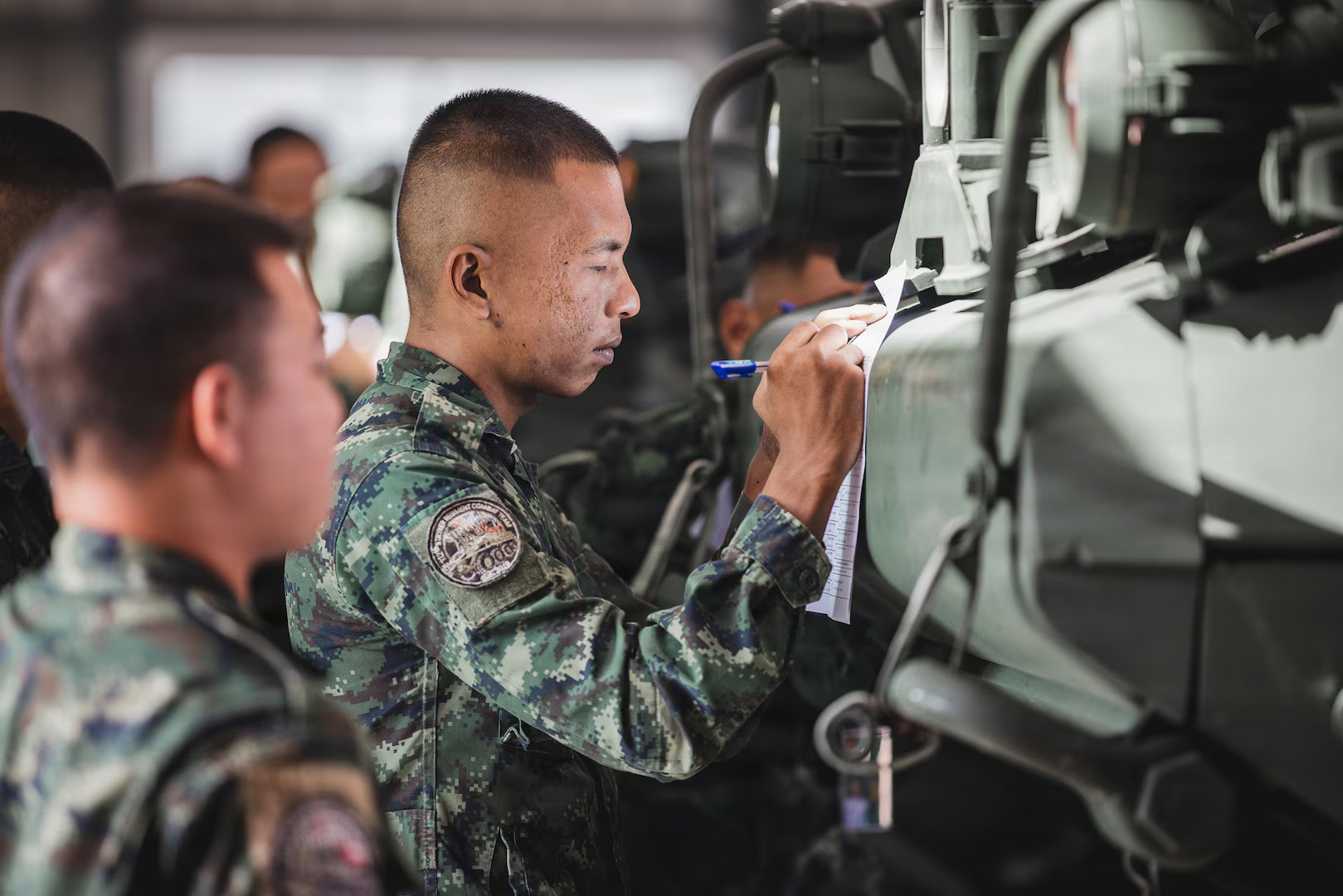
The Washington National Guard has completed a three-week training program with the Royal Thai Army to improve the maintenance and readiness of Thailand’s armored vehicle fleet.
The joint training took place in Ko Chan District and ended on May 30. It focused on strengthening technical skills and logistics management for Thai military personnel responsible for maintaining armored vehicles.
The program was organized as part of the long-running partnership between the Washington National Guard and the Royal Thai Army. National Guard instructors worked alongside Thai military experts to develop and deliver the training.
The course included two parts. The first two weeks focused on vehicle maintenance, while the final week covered logistics and sustainment management.
Nineteen soldiers graduated from the program. The participants came from the Royal Thai Army’s 11th Maintenance Support Battalion and Forward Support Companies 1 and 2.
During the technical training, Thai mechanics received practical instruction using operational vehicles. The sessions focused on improving maintenance skills and reducing future equipment problems.
Training covered vehicle safety procedures, engine diagnostics, power pack removal, C7 valve calibration, suspension arm replacement, and vehicle overhauls.
The instructors also introduced training on Common Remotely Operated Weapon Stations, known as CROWS, along with integrated vehicle sensor systems. These systems are part of Thailand’s ongoing effort to modernize its military vehicle fleet.
While mechanics completed hands-on technical work, military leaders attended logistics training during the final week.
The logistics program included classroom lessons and practical exercises. Participants learned how to identify and record vehicle faults, improve maintenance work orders, forecast fuel and repair part requirements, manage battery programs, and review overall fleet readiness.
US Army Chief Warrant Officer 4 Ricky Thomas, who serves as the combined support maintenance shop superintendent with the Washington National Guard, said the training developed after earlier exchanges with the Royal Thai Army.
Thomas said he first observed differences in maintenance practices during a Stryker Leader Course held in Thailand in July 2023. Those visits helped identify areas where additional training could strengthen maintenance operations.
Later assessments found that Thailand’s 112th Stryker Regiment Combat Team had a limited number of formally trained maintenance personnel. At the time, one forward support company maintained the regiment’s vehicle fleet with only 15 mechanics, and only one had completed formal maintenance training.
Following those findings, Royal Thai Army leaders requested additional technical and logistics support.
The Washington National Guard responded by sending maintenance specialists to help establish a local training program that could continue developing Thai military personnel.
The training was organized through the National Guard Bureau’s State Partnership Program and the Joint US Military Advisory Group in Thailand.
The Washington National Guard and the Royal Thai Army have worked together through the State Partnership Program since 2002. Their partnership includes military training, professional exchanges, disaster response cooperation, and other joint activities.
The latest graduating class marks the fourth technical maintenance course and the third logistics management seminar delivered in Thailand under this partnership.
Military officials say the program helps improve vehicle readiness while building long-term technical skills among Thai maintenance teams.
The continued cooperation also supports stronger defense ties between the United States and Thailand. Both countries say regular training and knowledge sharing help improve military readiness and strengthen their ability to respond to regional security challenges.
With another successful training program completed, both partners plan to continue working together to improve maintenance standards, logistics planning, and operational readiness for Thailand’s armored vehicle fleet in the years ahead.
