


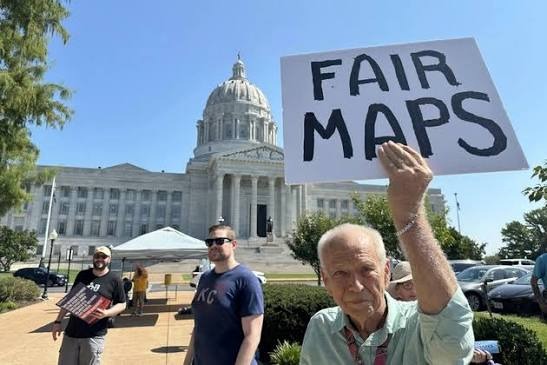
Missouri’s battle over congressional district boundaries has entered a critical phase after conflicting court decisions created new uncertainty ahead of the November election. The legal fight, which could affect the balance of political power in the state, has left election officials working under tight deadlines while appeals continue through the court system.
The dispute centers on a Republican-supported redistricting plan that is expected to improve the party’s chances of winning an additional seat in the U.S. House of Representatives. The issue has been moving through state and federal courts for months, with both political parties arguing that the outcome could have a major impact on voters and candidates.
On Tuesday, Republicans faced an initial setback when Justice Brett Kavanaugh rejected an emergency appeal seeking to block a Missouri Supreme Court ruling issued last week. That state ruling restored earlier congressional district boundaries and ordered that voters be given the opportunity to weigh in on the redistricting plan during the November election.
Kavanaugh’s action appeared to leave the state court decision in place. The justice did not provide a detailed explanation for the ruling. He also did not indicate that the matter had been referred to the full Supreme Court for consideration.
However, the situation changed only minutes later when Chief U.S. District Judge Stephen Clark issued a temporary restraining order that effectively paused the state court ruling. Clark directed Missouri officials to continue using the congressional map that was already used during primary elections held in August.
The federal decision provided a major boost to supporters of the Republican-backed map. Political analysts believe the district boundaries could help Republicans gain another congressional seat, especially in districts currently represented by Democrats.
The response from Democratic groups was immediate. Organizations challenging the map filed an appeal with the 8th U.S. Circuit Court of Appeals and requested emergency intervention. They argued that the federal ruling should be halted while the appeal is reviewed.
Democratic lawyers also asked Clark to suspend his own order. In addition, they sought action from Missouri’s Supreme Court, claiming state officials should be required to follow the state court’s earlier decision.
The legal battle has placed election administrators in a difficult position. County officials have spent months preparing for different outcomes as the dispute moved through multiple courts. Because the final district boundaries remained uncertain, election offices developed separate plans for each possible scenario.
The timing of the rulings has increased the pressure. Both decisions arrived shortly before a major deadline for ballot preparation. Election officials must finalize ballots before they are sent to voters later this month, leaving little room for additional delays or changes.
Following the federal court ruling, Missouri Secretary of State Denny Hoskins instructed election officials to prepare for the November election using the same district map that was in place during the August primaries. The guidance signaled that state officials intended to move forward under the newer boundaries unless another court order changed the situation.
Supporters of the federal ruling argue that altering district lines after primary elections have already been completed could create confusion for voters and candidates. They also claim that changing the map at this stage raises constitutional concerns and could affect the fairness of the election process.
Judge Clark agreed that the Republican candidates who brought the lawsuit were likely to succeed on constitutional arguments. His ruling suggested that changing district boundaries so close to the election could create legal problems under federal law.
Democrats reject that view. They argue that election confusion resulted from decisions made by Republican officials and that voters should be allowed to decide whether the redistricting plan should remain in place. They maintain that the state Supreme Court’s ruling should guide the process.
The dispute has attracted attention beyond Missouri. President Donald Trump publicly criticized the state court decision and voiced support for the district map used during the primary elections. His comments highlighted the national political interest surrounding the case.
As appeals continue, uncertainty remains over which congressional map will ultimately be used in November. The final outcome could shape representation in Missouri and influence closely watched House races. With important election deadlines approaching, officials and voters are awaiting the next court decision that may settle the issue.
