


The U.S. Navy has deployed the aircraft carrier USS George Washington and its strike group into the South China Sea following a series of recent confrontations between Chinese and Philippine forces in disputed waters. The move highlights growing concerns over regional security and underscores continued U.S. support for the Philippines amid rising maritime tensions.
The USS George Washington Carrier Strike Group entered the South China Sea after passing through the Luzon Strait last week. The deployment followed nearly two months of operations in the Philippine Sea and comes as tensions between Beijing and Manila continue to increase.
The strike group is led by the aircraft carrier USS George Washington and includes the guided-missile cruiser USS Robert Smalls as well as the destroyers USS Shoup and USS Benfold. The carrier group is one of the most powerful naval formations operating in the Indo-Pacific region.
U.S. Ambassador to the Philippines Lee Lipton said the deployment demonstrates Washington’s commitment to freedom of navigation and overflight in international waters. She noted that the carrier strike group’s capabilities, including advanced F-35 fighter aircraft, support efforts to maintain open sea lanes and challenge excessive maritime claims.
The deployment follows a serious confrontation on July 20 near Second Thomas Shoal, a disputed feature in the South China Sea. According to Philippine officials, Chinese Coast Guard personnel and Philippine forces became involved in a direct physical clash.
Philippine authorities reported that a member of the Philippine Navy was injured during the incident and required medical evacuation. The confrontation marked one of the most severe encounters between the two sides in recent years.
Unlike previous incidents involving water cannons, dangerous maneuvers, and vessel collisions, the July confrontation involved direct physical contact between personnel from both countries. The event raised concerns about the possibility of further escalation in the disputed region.
U.S. Secretary of State Marco Rubio said an American Coast Guard vessel operating nearby played a role during the incident. According to Rubio, the vessel helped maintain separation between the two sides and assisted efforts to ensure the injured individual received medical treatment.
The U.S. Coast Guard has increased its presence in Southeast Asia in recent months. Several Sentinel-class cutters that were previously assigned to the Middle East have been repositioned to support regional operations in the Indo-Pacific.
Tensions did not end with the Second Thomas Shoal incident. Philippine maritime authorities later reported additional encounters near Scarborough Shoal, another disputed area in the South China Sea.
According to Philippine officials, Chinese vessels attempted to interfere with the activities of Philippine fishing boats operating in the area. Video released by Philippine maritime agencies showed the use of water cannons and close-range maneuvers involving Chinese ships.
China and the Philippines have long disputed sovereignty claims across parts of the South China Sea. The waterway is one of the world’s most important shipping routes and is believed to contain significant fishing resources and energy reserves.
The United States does not take a position on competing territorial claims but regularly conducts naval operations aimed at supporting international maritime law and freedom of navigation.
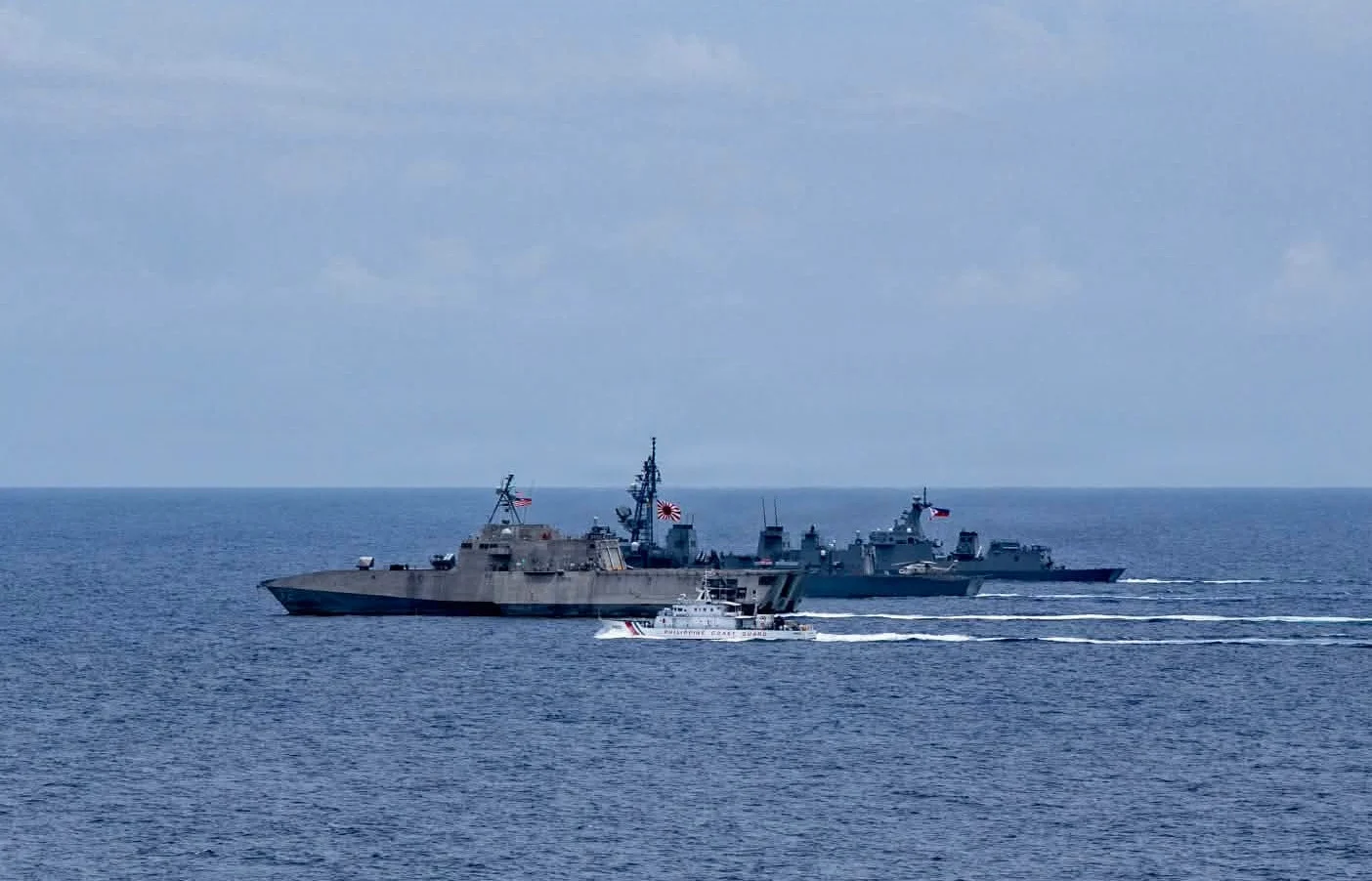
Before entering the South China Sea, the George Washington Carrier Strike Group conducted training exercises with the Japan Maritime Self-Defense Force destroyer JS Yūdachi. The Japanese vessel also participated in maritime cooperation activities alongside Philippine naval forces and the U.S. Navy.
Military cooperation among the United States, Japan, and the Philippines has expanded in recent years as regional security concerns have grown. Joint exercises and patrols are increasingly viewed as important tools for maintaining stability and strengthening partnerships in the Indo-Pacific.
This is not the first time U.S. carrier strike groups have been deployed to the South China Sea following incidents involving China and the Philippines. Similar deployments occurred last year after additional confrontations near disputed maritime features.
Analysts say the latest carrier deployment sends a strong signal of American support for its treaty ally, the Philippines. At the same time, it reflects Washington’s broader strategy of maintaining a visible military presence in a region that remains a focal point of geopolitical competition.
As maritime disputes continue and military activity increases, regional governments and international observers will be closely monitoring developments in the South China Sea. The presence of the USS George Washington Carrier Strike Group is likely to remain a key symbol of that ongoing strategic competition.
