


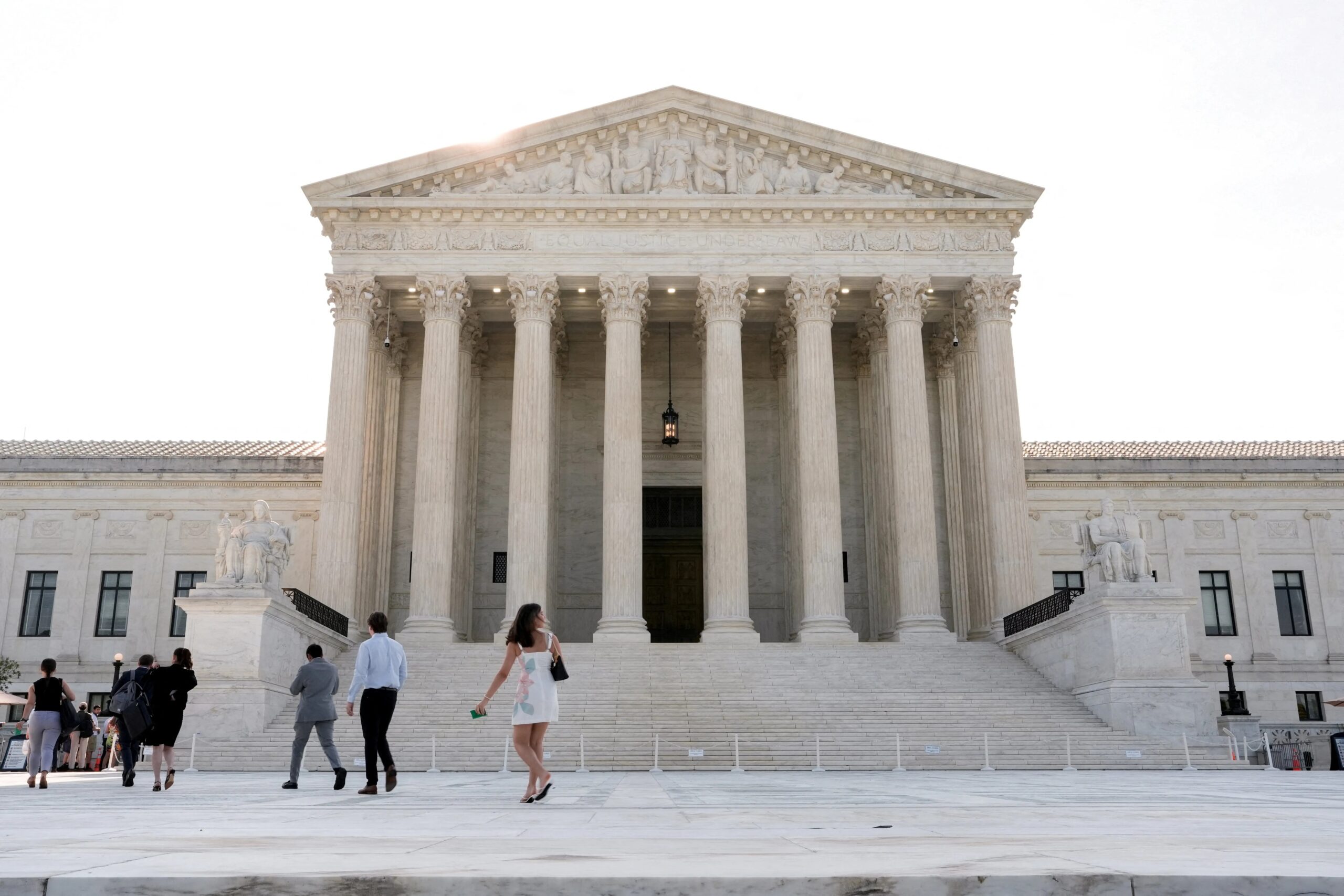
The U.S. Supreme Court delivered a major victory to Democrats on Thursday by blocking a Republican-backed congressional map in Missouri that was expected to help the GOP gain an additional seat in the House of Representatives.
The decision came after months of legal battles over congressional district boundaries and ended a week of confusion for election officials across the state. The ruling means Missouri will use its existing congressional map for the November election rather than a newer plan supported by Republicans.
The Supreme Court acted on an emergency appeal filed by opponents of the revised map. The justices issued the order without any noted dissent, allowing an earlier Missouri Supreme Court ruling to remain in effect.
The dispute centered on whether Missouri should continue using a new set of congressional districts that had already been used during the state’s primary elections. Republicans argued that the revised map was legal and should remain in place for the general election.
Democrats and redistricting groups disagreed. They challenged the map in court and argued that election officials should continue using the previous district lines.
The legal battle intensified after Missouri’s highest court ordered election officials to rely on the existing congressional map. That decision appeared to settle the issue until a federal judge stepped in.
Earlier this week, U.S. District Judge Stephen Clark ordered Missouri officials to use the newer districts in November. His ruling effectively overrode the state court’s decision and created fresh uncertainty about which map voters would see on Election Day.
As a result, election officials received conflicting instructions within a matter of days. Some had already begun preparing for the election under one map before being told to switch to another.
Thursday’s Supreme Court ruling reversed the federal court order and restored the Missouri Supreme Court’s directive. Election authorities must now move forward using the congressional districts first adopted in 2022.
The decision is a significant setback for Missouri Republicans, who hoped the revised map would improve their chances of winning another House seat. Political observers viewed the proposed boundaries as more favorable to GOP candidates.
Democrats celebrated the outcome after spending months challenging the redistricting effort through multiple lawsuits. Supporters of the legal challenge argued that the ruling protects established election procedures and prevents last-minute changes to district boundaries.
Missouri Secretary of State Denny Hoskins had previously warned that abandoning the newer map could create confusion for voters and local election offices. State officials also raised concerns about election deadlines and ballot preparation schedules.
Those concerns became more urgent because election administrators were already working to finalize ballots. Local offices faced pressure to complete preparations in time for absentee and mail voting.
The Supreme Court’s action came shortly before the Missouri Supreme Court held a hearing regarding Hoskins’ compliance with its earlier order.
During the hearing, several judges questioned the secretary of state’s actions and expressed frustration over delays in implementing the court’s directive. Members of the court repeatedly sought assurances that election officials would follow the state ruling after the federal court order was blocked.
Lawyers representing Hoskins argued that he had been caught between competing legal decisions from state and federal courts. They said officials were attempting to comply with changing rulings while maintaining election operations.
Judges appeared dissatisfied with some of those explanations and pressed attorneys for clearer commitments.
Following the Supreme Court’s intervention, Hoskins issued a statement confirming that Missouri would use the 2022 congressional map.
He instructed local election authorities to proceed under the state court order and prepare ballots using the existing district lines.
Later on Thursday, Missouri Chief Justice W. Brent Powell ruled that Hoskins had been in contempt of court because of his earlier actions. However, the court determined that he had corrected the situation by directing officials to follow the state order.
Redistricting opponents welcomed the decision and described it as the final chapter in a lengthy legal battle.
Richard von Glahn, executive director of People Not Politicians, said the Supreme Court’s action effectively settled the dispute over Missouri’s congressional districts. He argued that any confusion surrounding election preparations resulted from decisions made by state officials rather than the court challenge itself.
With the ruling now in place, Missouri election officials can move forward with a clear set of district boundaries. The decision removes uncertainty ahead of November and closes a closely watched redistricting fight with major political consequences for both parties.
