


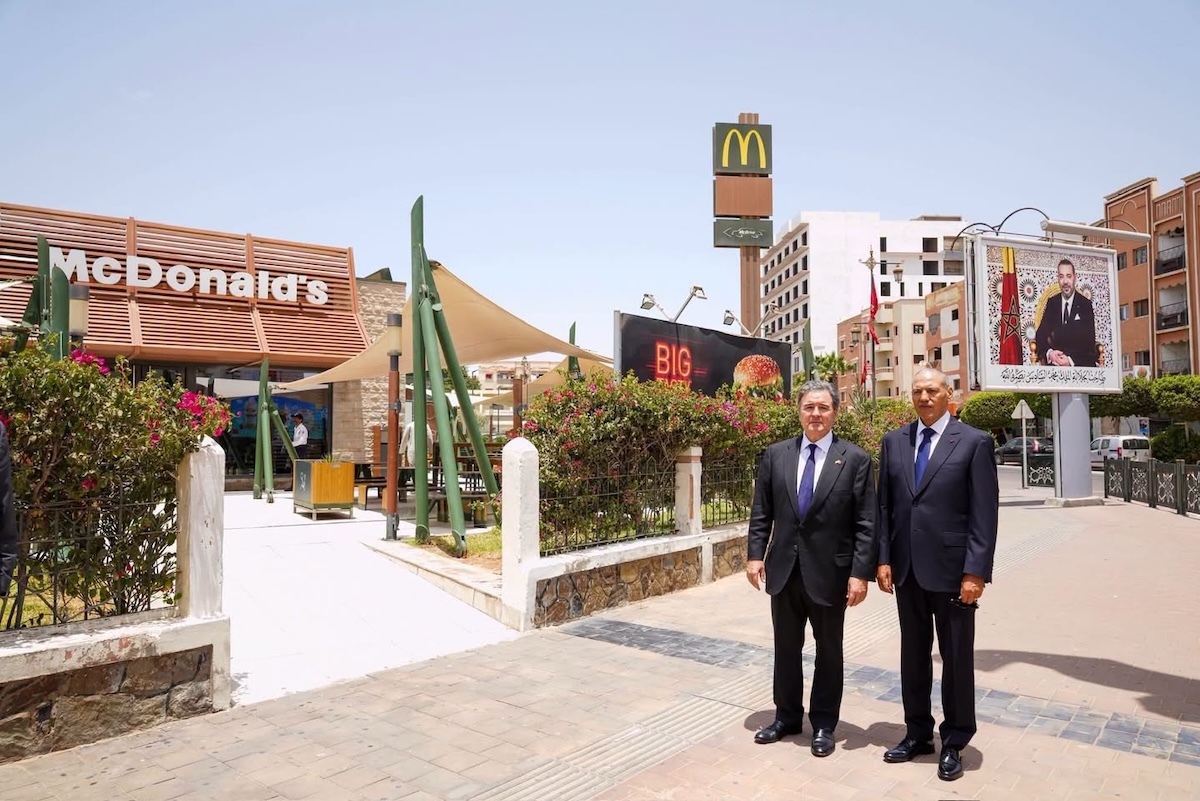
The United States has announced its first federal investment in a project located in Morocco’s southern provinces, marking a new stage in economic cooperation between Washington and Rabat.
The announcement was made by U.S. Ambassador to Morocco Duke Buchan III during a signing ceremony for a grant awarded by the U.S. Trade and Development Agency (USTDA). The funding will support preliminary engineering studies for a clean energy project planned in the city of El Aaiún.
The project will be developed by the Ornex consortium, which aims to produce hydrogen and ammonia in the region. Officials say the initiative is expected to help create jobs, attract investment, and strengthen the growing clean energy sector in Morocco.
Speaking during his first visit to El Aaiún, Ambassador Buchan described the funding as an important milestone in the relationship between the United States and Morocco. He noted that the two countries have maintained strong ties for centuries and share one of the longest diplomatic relationships in American history.
According to Buchan, the current phase of cooperation goes beyond historical connections and focuses on building stronger economic partnerships. He said the investment reflects a shared commitment to development, innovation, and long-term growth.
The ambassador also reaffirmed Washington’s support for Morocco’s autonomy proposal regarding the Sahara region. He described the initiative as the most credible path toward a lasting solution to the long-running dispute and said U.S. support is now being demonstrated through practical economic engagement as well as diplomatic positions.
Officials said the USTDA grant represents the first U.S. federal funding directed toward a project in the Moroccan Sahara. The funding will help prepare technical studies needed for future development and investment decisions.
Buchan stated that the project could encourage additional American companies and investors to explore opportunities in the region. He highlighted the area’s economic potential, strategic location, and business environment as factors that could attract future investment.
The hydrogen and ammonia project forms part of Morocco’s broader strategy to expand renewable energy production and strengthen its position in global clean energy markets. Morocco has invested heavily in renewable energy infrastructure over the past decade and continues to pursue projects aimed at reducing carbon emissions while supporting economic growth.
Supporters of the initiative believe the project could contribute to the development of new industries in the southern provinces. The expected growth in clean energy production may also create employment opportunities and encourage technology transfer in the region.
The investment aligns with development plans promoted by King Mohammed VI, which focus on infrastructure expansion, economic diversification, and stronger integration of the southern provinces into international trade networks.
Observers note that the announcement reflects an evolving approach in U.S.-Morocco relations. For many years, American engagement on the Sahara issue focused mainly on diplomatic and political matters. The latest funding initiative signals a greater emphasis on economic cooperation and investment.
The selection of El Aaiún for the first federally funded U.S. project in the region is viewed by analysts as a significant step in translating political support into tangible economic activity. It also highlights growing international interest in renewable energy opportunities across North Africa.
Beyond the clean energy sector, the project connects with larger regional development plans. Morocco continues to advance several major infrastructure initiatives, including the Atlantic port of Dakhla and the Africa-Atlantic gas pipeline project. These efforts aim to strengthen trade links and position the region as a gateway between Africa and Europe.
Economic experts say investments in energy, transportation, and logistics could help increase the region’s importance in international supply chains. Clean energy projects are expected to play a central role in that strategy as global demand for alternative energy sources continues to rise.
The USTDA grant marks the beginning of what officials describe as a deeper phase of economic cooperation between the United States and Morocco. As engineering studies move forward, both countries are expected to explore additional opportunities for collaboration in energy, infrastructure, and investment.
The project is being closely watched as a potential model for future partnerships that combine economic development goals with long-term strategic cooperation between Washington and Rabat.
