


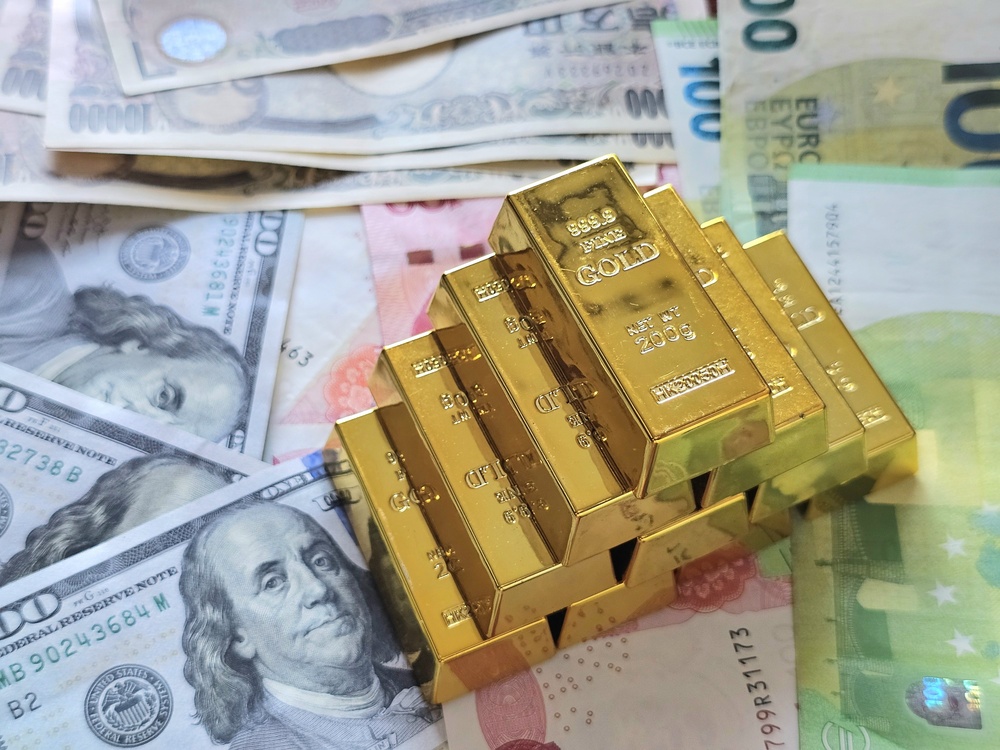
The National Bank of Poland (NBP) has pushed its gold holdings to roughly 550 tonnes, worth over €63 billion, as part of a long-term strategy to safeguard the country’s financial stability. President Adam Glapiński has long stressed the importance of gold, highlighting its independence from credit risk and foreign monetary policies, as well as its ability to withstand economic shocks. The bank now aims to increase reserves to 700 tonnes, bringing the total value to around PLN 400 billion (€94 billion).
Rapid Growth in Poland’s Bullion Holdings
Gold’s share of Poland’s foreign reserves has jumped dramatically. From 16.86% in 2024, it rose to 28.22% by the end of 2025—one of the fastest shifts in reserve composition among central banks worldwide. Most acquisitions were made in the final months of 2025, during a period of market volatility and geopolitical uncertainty. Glapiński has announced plans to continue expanding gold reserves strategically, underscoring their role in economic stability.
Following a Global Trend
Poland’s push mirrors a global pattern. According to the World Gold Council, most central banks increased their gold holdings in 2025, treating bullion as a hedge against financial crises and currency fluctuations. Nearly 95% of central banks expect their gold reserves to grow in the coming year. Marta Bassani-Prusik of the Mint of Poland explains that gold’s independence from monetary policy, low credit risk, and ability to diversify reserves away from the dollar make it an attractive asset. Analysts also note that undisclosed purchases by countries like China and Russia may hint at preparations for a more gold-centered financial system.
Surpassing the ECB and Market Outlook
Poland now holds more gold than the European Central Bank (ECB), whose reserves total around 506.5 tonnes. While critics argue that funds spent on gold could yield interest in bonds, the NBP views bullion as a cornerstone of long-term financial security. Gold prices recently hit record highs, and forecasts for 2026 remain strong, with estimates ranging from $4,150 to $5,300 per ounce. Rising uncertainty and geopolitical tensions are driving both institutional and retail investors toward gold, reaffirming its status as a safe-haven asset.
Reaching 550 tonnes marks a significant milestone, but Poland’s further acquisitions indicate that the country intends to remain a leading force in the global gold market amid an evolving financial landscape.
